
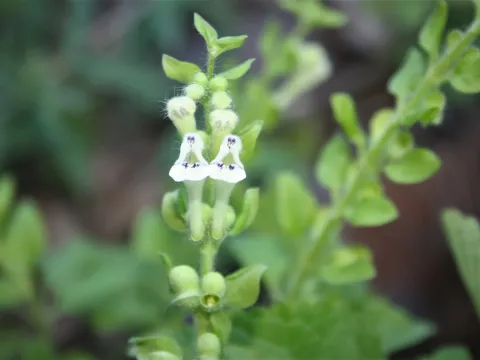
White skullcap
Scutellaria albida
White skullcap (Scutellaria albida) is a member of the Lamiaceae family. It is a perennial herbaceous plant that is best propagated via seedlings to ensure better plant establishment and uniformity in the field.
What the section contains
White skullcap
Seeds should be sown in early spring, typically in March, within a controlled greenhouse environment. The seeds require light to germinate, so they should be only lightly covered with a thin layer of substrate, ensuring a temperature of about 18-20°C.
Pricking out the seedlings occurs at the two-leaf stage. This process encourages the development of a robust root system, which is crucial for the plant's future resilience when transplanted into open ground.
Transplanting into the field is carried out in late May, once the risk of frost has passed. Plants are usually spaced 45 cm apart between rows and 30 cm apart within the rows to allow for adequate ventilation and growth.
Direct seeding in open ground is possible in regions with long, warm growing seasons. However, this method requires meticulous weed management during the initial stages, as young seedlings grow slowly compared to established transplants.
The plant thrives in fertile, well-drained loamy soils with a neutral pH. It is highly sensitive to waterlogging, which often leads to root rot, making site selection with good natural drainage a priority.
White skullcap is a sun-loving species. It should be cultivated in open areas with full exposure to sunlight, as shade negatively impacts the accumulation of beneficial bioactive compounds within the aerial parts.
While the species is moderately hardy, it benefits from mulch coverage in regions with severe winters and little snow. This practice protects the root system from deep freezing and helps maintain stable moisture levels during the spring thaw.
Regular, moderate irrigation is necessary throughout the growing season. It is particularly critical to avoid drought stress during the budding and flowering phases, as these stages directly dictate the quality of the raw herbal material.
Soil management includes consistent aeration through inter-row cultivation. Keeping the soil loose suppresses weed competition and promotes oxygen access to the root zone, significantly enhancing overall biomass production.
Yield expectations for White skullcap vary based on soil fertility and the implementation of modern agricultural practices. A well-managed plantation remains productive for three to five years before requiring crop rotation.
Under optimal conditions, the average yield ranges between 1.5 and 3 tonnes of dry herbal material per hectare. Maximum yields are typically achieved during the second and third years of cultivation.
Quality control is vital, as the crop's economic value depends on the concentration of specific flavonoids and antioxidants. Harvesting at the peak of the flowering stage is essential to meet pharmaceutical standards.
The adoption of drip irrigation systems has proven highly effective in stabilizing annual yields, especially in regions prone to summer droughts. This technology allows for precise nutrient delivery and water conservation.
Commercial sustainability of this crop is supported by the growing demand for natural herbal ingredients. Improving post-harvest processing methods helps increase the marketability and shelf life of the final product.
Common pests affecting White skullcap include aphids and spider mites, which can cause significant foliage damage. Biological control agents or targeted, low-toxicity insecticides are recommended to manage outbreaks without compromising product quality.
Root rot is the most common disease, primarily occurring due to poor drainage or excessive soil moisture. Preventive measures such as choosing well-draining soil and maintaining proper plant spacing are the best ways to mitigate this risk.
Powdery mildew may appear during humid, warm conditions. If spotted, affected leaves should be removed immediately, and preventative fungicide treatments based on sulfur can be used to prevent widespread infection.
Weeds compete for nutrients and light, particularly in the first year of establishment. Mechanical weeding is necessary to prevent these plants from overtopping the crop and creating microclimates that encourage disease.
Phytosanitary monitoring is an essential part of plantation maintenance. Regularly checking for early signs of pests or disease ensures that interventions can be localized, reducing the need for broad-spectrum chemical use.
Harvesting should occur when the plants are in full bloom, as this is when the concentration of essential active compounds is at its highest. The window for optimal harvesting is relatively narrow, requiring efficient equipment.
The aerial parts of the plant are harvested by mowing them at a height of 5-10 cm above the ground. Proper calibration of mowing equipment is critical to ensure that no lower, woody stems are included in the harvest.
Post-harvest logistics involve immediate transfer of the fresh material to drying facilities to prevent self-heating and decomposition, which can drastically reduce the herbal quality and chemical potency.
Drying is performed in facilities with excellent ventilation or industrial dryers at temperatures not exceeding 45°C. This careful approach preserves the natural color and chemical integrity of the leaves and flowers.
Once dried, the product must be stored in a cool, dark, and dry place. Proper packaging protects the material from moisture and UV light, ensuring a shelf life of up to three years while maintaining pharmaceutical efficacy.