
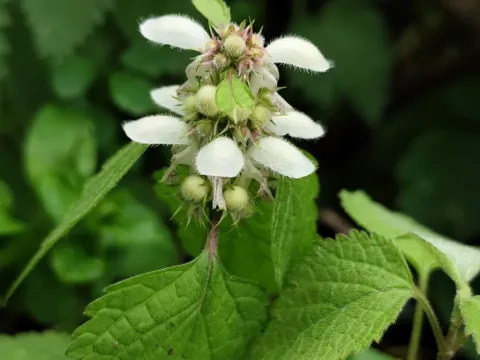
Zigzag deadnettle
Lamium flexuosum
The Zigzag deadnettle (Lamium flexuosum) belongs to the Lamiaceae family. It is a perennial herbaceous plant native to parts of Western Europe, typically found in moist, shaded woodland environments.
What the section contains
Zigzag deadnettle
The plant thrives in partial to full shade, making it an excellent choice for ground cover in woodland gardens. It prefers cool, sheltered locations where foliage can remain moist throughout the growing season.
Requirements for soil health include high organic matter content and consistent moisture levels. While it tolerates various soil types, it performs optimally in well-draining, nutrient-rich loamy soil.
Regarding climatic requirements, the plant exhibits good frost resistance. It is well-adapted to temperate climates, showing vigorous growth in spring and autumn while slowing down during the peak of summer heat.
Agronomic management involves periodic division of established clumps to prevent overcrowding and ensure continued vitality. Mulching is highly recommended to retain soil moisture and reduce the need for frequent irrigation.
Common plant diseases affecting Lamium flexuosum include powdery mildew, which typically arises when air circulation is restricted in dense, crowded plantings during periods of high humidity.
Slugs and snails are the primary pests that pose a threat to the foliage, particularly during wet seasons, as they find the tender leaves highly attractive and can cause significant aesthetic damage.
Root rot remains a serious risk if the plant is grown in areas with poor drainage. Once established, this fungal issue is difficult to treat, necessitating preventative soil management and strategic watering.
To maintain plant health, it is essential to monitor for spider mites during dry spells. If infestations occur, applying a fine mist of water or horticultural soap can help manage pest populations effectively.
Overall, maintaining an open planting scheme that allows for sufficient airflow is the most effective cultural practice to prevent the majority of biotic and abiotic stressors for this species.