
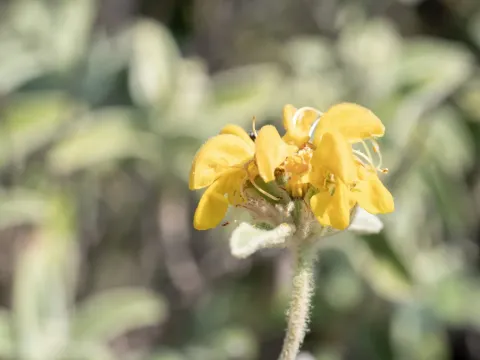
Phlomis floccosa
Phlomis floccosa
Phlomis floccosa is a perennial herbaceous plant from the Lamiaceae family, naturally occurring in arid regions. Successful cultivation depends heavily on soil temperature and precise seed placement.
What the section contains
Phlomis floccosa
Seeds are best sown in early spring when soil moisture is optimal, ensuring the germinating embryos are protected from late frosts while benefiting from natural stratification.
The optimal seeding depth is shallow, around 1 centimeter, allowing the seeds to access light quickly upon emergence to prevent etiolation.
Row spacing should be maintained between 40 to 60 centimeters, which allows for mechanical weeding and ensures that each plant receives adequate nutrients and sunlight.
Given its adaptation to harsh environments, this plant shows high vigor in its second year of growth after the root system has become firmly established.
The plant is highly adapted to extreme conditions, exhibiting remarkable drought resistance and an ability to thrive on poor, stony soils.
Well-drained soil is non-negotiable for Phlomis floccosa, as waterlogged conditions quickly lead to root decay and the death of the plant population.
Being a heliophyte, it requires direct sunlight to complete its life cycle and to concentrate the beneficial chemical compounds found in its tissues.
It prefers neutral to alkaline soil conditions and can even tolerate low-fertility substrates that would be unsuitable for more traditional food crops.
No intensive fertilization program is required; in fact, excessive nitrogen usage can diminish the quality of the medicinal extracts produced by the plant.
The crop is highly valued in both the pharmaceutical industry for its secondary metabolites and in the apiculture sector as a reliable nectar source.
Nectar yield is notably consistent during mid-to-late summer, providing bees with essential sustenance during periods when other forage is scarce.
The harvesting of aerial parts occurs during the full bloom phase, which is when the plant's metabolic activity is at its peak.
With correct harvesting techniques, producers can maintain a productive field for up to six years before the need for reseeding arises.
Biomass productivity is stable across different years, provided that the plants are not harvested too aggressively during the flowering window.
The primary agronomic threat to Phlomis floccosa is the presence of fungal pathogens such as powdery mildew, which thrive in humid or stagnant air.
Root rot is a significant risk, particularly in high-rainfall areas or in fields with heavy clay soils that retain excess water.
Sucking insects, including aphids, can impact plant health by feeding on the nectar-rich flowers, potentially reducing the overall quality of the yield.
Early detection through frequent field scouting is recommended, focusing on the undersides of leaves and the base of the stems where pests often hide.
Integrated pest management, favoring biological controls and site selection, is the preferred approach over chemical application for this sensitive crop.
Harvesting is performed by cutting the stems at least 10–15 centimeters above the ground to ensure the perennial crown remains intact for future regrowth.
Post-harvest management involves rapid drying in shaded, well-ventilated areas to ensure the preservation of the essential oils and colors.
When collecting seeds, wait until the flower spikes have turned brown and dry, then carefully thresh them to prevent physical damage.
Storage of the finished botanical product must occur in cool, dry conditions to prevent the growth of storage molds and the loss of aromatic properties.
Proper scheduling of the harvest is essential, as waiting too long can result in significant seed dispersal and a loss of harvestable mass.