
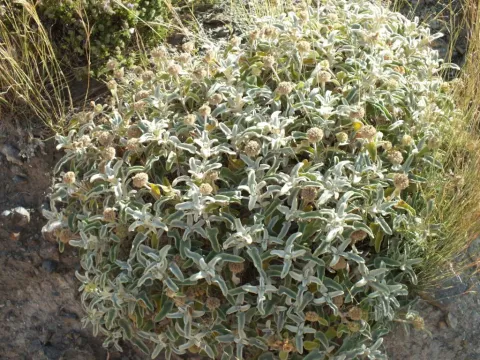
Phlomis cytherea
Phlomis cytherea
Phlomis cytherea is a perennial herbaceous plant belonging to the Lamiaceae family. It is a rare endemic species originating from the island of Kythira, Greece, where it has adapted to harsh Mediterranean conditions.
What the section contains
Phlomis cytherea
The culture requires well-drained, stony, or sandy soil with a neutral to alkaline pH. Due to its Mediterranean origin, it is highly adapted to high temperatures and intense sunlight, making it an excellent choice for xeriscaping.
Environmental requirements include a full sun position and protection from excessive winter humidity. In agricultural settings, it is crucial to avoid rich, organic soils that retain too much moisture, as these can lead to root degradation.
The plant demonstrates high drought tolerance once established. Minimal irrigation is required during the summer, whereas excessive watering will jeopardize the structural integrity of the plant and its ability to bloom.
Effective agrotechnical practices for this species focus on providing high airflow and excellent drainage. It is typically propagated by seeds or division, needing space to develop its characteristic woody-based shrubby habit.
Root rot is the most significant threat to Phlomis cytherea when grown in suboptimal soil conditions. It is essentially caused by stagnant water, which compromises the root system's ability to take up nutrients and causes wilting.
Aphids can infest the tender tips of the foliage during the spring growth flush. Integrated pest management, including the use of neem oil or insecticidal soaps, is usually sufficient to control these populations.
Powdery mildew can occur during periods of high humidity and poor ventilation. Providing adequate spacing between plants is the primary preventive measure to ensure the foliage remains dry and healthy.
Slugs and snails may attack young plants, particularly in late winter or early spring. Applying a layer of grit around the plant base is a traditional and effective method to deter these mollusks from reaching the foliage.
While generally robust, the plant can be susceptible to viral mosaic patterns, which are often transmitted by sap-sucking insects. Affected plants should be rogued out immediately to prevent the infection from spreading through the nursery or field.