
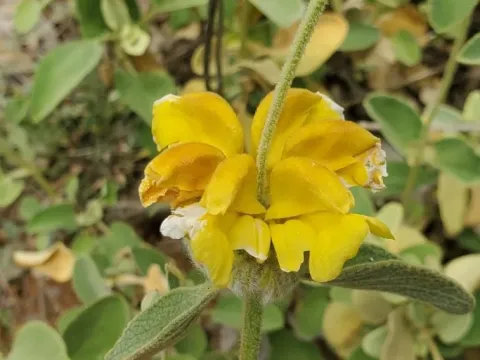
Phlomis chrysophylla
Phlomis chrysophylla
Phlomis chrysophylla is a perennial herbaceous plant belonging to the Lamiaceae family. Native to the eastern Mediterranean, specifically Cyprus, it is well-adapted to rocky habitats and exposed slopes, where it thrives under intense solar radiation.
What the section contains
Phlomis chrysophylla
This species is highly photophilous and requires full sun to maintain its distinctive golden foliage and robust growth. In environments with insufficient light, the plant tends to become leggy and loses its characteristic aesthetic appeal.
Regarding climate, the plant is exceptionally drought-tolerant. Its leaves are covered in fine, dense hairs which serve as an adaptation to reduce transpiration and protect the plant from high temperatures and desiccating winds.
The soil requirements are strict: the plant mandates excellent drainage. It thrives in poor, rocky, or sandy substrates. Heavy or waterlogged soils are detrimental, often leading to rapid root decay and plant death within a single growing season.
Agronomic management is relatively low-intensity. Minimal fertilization is recommended, as excess nutrients encourage lush, weak growth that reduces the plant's natural resistance to environmental stressors and pests.
The most significant threat to Phlomis chrysophylla is root rot, typically caused by waterlogged soil. Proper site selection with high soil porosity is the primary defense strategy against this destructive fungal infection.
Pests such as spider mites and aphids may occasionally infest the plant, particularly during prolonged periods of drought when the plant is under stress. Regular observation and localized control can prevent these populations from overwhelming the specimen.
Powdery mildew may occur if there is poor air circulation around the crown of the plant. Ensuring adequate spacing between plants is essential to promote airflow and keep the foliage dry, which suppresses the development of fungal spores.
Invasive weeds can easily outcompete young specimens during their initial establishment phase. Hand-weeding around the base is recommended until the plant is sufficiently mature to form a dense canopy that shades out competing weeds.
Overall, keeping the plant in a condition that mimics its dry, rocky native habitat is the best way to ensure it remains vigorous and resistant to potential diseases throughout its life cycle.