
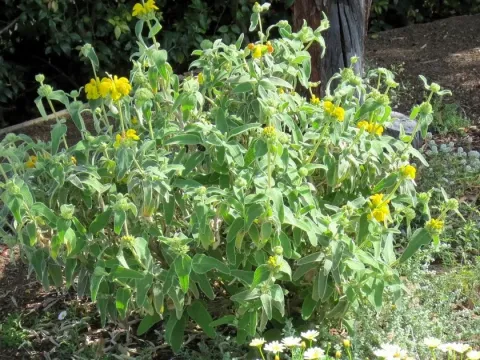
Phlomis hybrids
Phlomis hybrids
Phlomis hybrids are distinct perennial plants belonging to the Lamiaceae family. These plants are appreciated for their architectural foliage and whorls of striking flowers, which add significant value to sustainable landscapes.
What the section contains
Phlomis hybrids
Seeds of Phlomis hybrids require stratification to ensure successful germination. They can be sown in late autumn for winter sowing or early spring in a seed tray using a well-draining, gritty soil mix.
Propagation is most commonly achieved by dividing mature clumps in spring or early autumn. This ensures the survival of desired traits in hybrid cultivars and results in faster plant establishment.
When selecting a planting site, consider that Phlomis hybrids require substantial space, typically 50 to 80 cm apart, to maintain airflow and prevent foliage from becoming overcrowded.
The establishment period is crucial, so ensure that young plants are watered regularly until their root systems are well-developed, after which they become highly self-sufficient.
Phlomis hybrids thrive in full sun exposure. They are highly valued in modern agriculture and landscaping for their remarkable drought tolerance once they have matured in their permanent location.
The ideal soil is poor to moderately fertile, alkaline to neutral, and possesses excellent drainage. These plants will struggle and likely rot in wet, heavy, or poorly draining clay soils.
Climatic requirements involve dry, warm conditions during the growing season. They are hardy plants, but in colder zones, a thick layer of mulch around the crown can provide necessary protection against frost heaves.
Minimal fertilization is required; applying a small amount of granular balanced fertilizer in early spring is usually sufficient to support healthy flower production throughout the season.
Regular maintenance involves light pruning of spent flower spikes. This not only keeps the plant looking tidy but also encourages a secondary flush of growth in some species.
Phlomis hybrids are generally considered robust and are rarely troubled by major insect pests. Their hairy, felt-like leaf surface acts as a natural deterrent against many common garden insects.
The primary threat to the health of these plants is moisture-related fungal diseases. In environments with poor air circulation, powdery mildew can appear on the leaves.
Root rot is the most serious risk, typically caused by waterlogged soils during winter months. Planting on a slight slope or raised bed can significantly mitigate this risk.
Cultural control is the best management strategy. By ensuring adequate spacing and selecting a site with optimal sun and soil drainage, most disease issues are easily avoided.
If fungal issues persist, targeted application of appropriate fungicides can be used, but prevention through correct site selection remains the most effective long-term solution.