
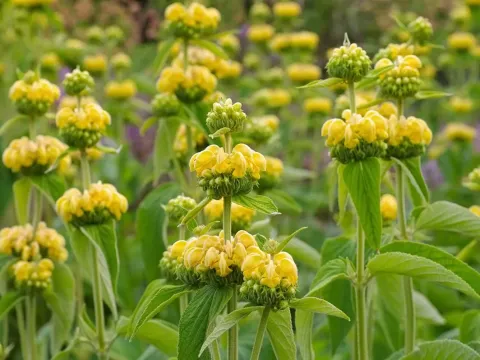
Phlomis grandiflora
Phlomis grandiflora
The sowing of Phlomis grandiflora is typically performed in late autumn or early spring, requiring a cold stratification period to ensure successful germination of the seeds.
What the section contains
Phlomis grandiflora
Seeds should be sown in prepared soil at a depth of 1–2 centimeters, ensuring sufficient spacing between rows to facilitate the long-term growth of this perennial species.
Direct seeding in the field is preferred for large-scale operations, although transplanting seedlings from a greenhouse can improve early survival rates in harsh conditions.
Maintenance of moderate soil moisture during the initial weeks is crucial for establishing a healthy stand, as seedling development is relatively slow in the first season.
Care must be taken to ensure that the seed bed is free from competing weed species, as Phlomis seedlings are sensitive to shading and nutrient competition during their establishment.
Phlomis grandiflora, a member of the Lamiaceae family, thrives in well-drained soils and requires full sun exposure to achieve its full vegetative potential.
The crop is highly tolerant of poor, stony, or sandy soils, provided that there is no risk of waterlogging, which is a major limiting factor for its root health.
This species is exceptionally drought-tolerant once established, making it a sustainable choice for farming in regions prone to summer heat and irregular precipitation patterns.
A neutral to slightly alkaline soil pH is optimal for nutrient uptake and overall plant vigor, which supports the production of essential secondary metabolites.
While hardy, the plant benefits from protection against extremely cold winds in northern latitudes, although the root system typically remains dormant and survives until the next cycle.
The commercial harvest of Phlomis grandiflora focuses on the aerial parts, which are valued for their pharmaceutical properties and their contribution to honey production.
Depending on soil fertility and density, yields can range significantly, typically reaching 1.5 to 2.5 tons of dry material per hectare under favorable management practices.
The peak yield is usually achieved in the third or fourth year, after which the plantation remains productive for several seasons with minimal maintenance requirements.
Harvesting should be timed precisely to coincide with full flowering, as the concentration of therapeutic compounds and essential oils fluctuates throughout the phenological stages.
Maximizing the density of high-quality flowering stems is the primary objective of commercial growers, as this directly dictates the market value of the harvested raw material.
Primary threats to Phlomis grandiflora include fungal diseases such as powdery mildew, which thrive in conditions of poor air circulation and excessive humidity within the canopy.
Root rot is a critical risk factor, especially during prolonged wet weather, necessitating the use of raised beds or well-draining soil sites to mitigate pathogen development.
Pests like aphids and spider mites can cause localized damage, particularly during periods of environmental stress, requiring regular monitoring to prevent large-scale infestations.
Integrated pest management strategies are recommended, emphasizing cultural practices over chemical interventions to maintain the organic purity of the herbal product.
Maintaining proper spacing between rows is essential to ensure adequate airflow, which is the most effective cultural method to prevent the spread of foliar pathogens.
Harvesting is typically conducted using mechanical cutters that collect the stems during the peak flowering stage, ensuring maximum retention of essential oil-bearing structures.
Post-harvest processing involves immediate transport to a drying facility to prevent fermentation, which can lead to rapid degradation of active medicinal compounds.
Drying is performed in shaded, well-ventilated areas or controlled-temperature ovens, keeping heat below 45 degrees Celsius to preserve the integrity of sensitive phytochemicals.
Once dried, the biomass is screened to remove debris and processed according to specific commercial standards, which often involve milling to a set particle size.
Proper storage in moisture-resistant containers is vital to prevent quality loss over time, ensuring the final product remains stable until it reaches the processing or manufacturing stage.