
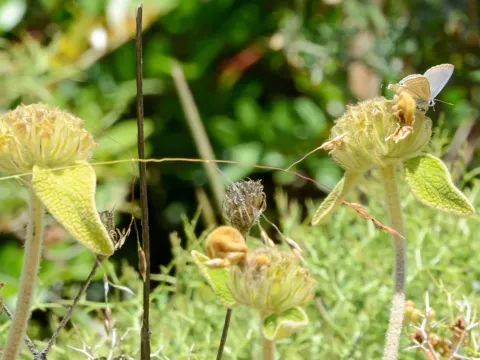
Phlomis cretica
Phlomis cretica
Sowing seeds of Phlomis cretica is most successful when performed in late autumn, as the seeds require a period of cold stratification to break dormancy.
What the section contains
Phlomis cretica
In spring sowing scenarios, seeds should be pre-treated by keeping them at low temperatures (near freezing) for at least six weeks to ensure uniform germination.
Seeds should be sown at a shallow depth of no more than 2 centimeters in a well-draining, gritty compost mix to prevent moisture-related seed failure.
Row spacing should be maintained between 40 to 50 centimeters to allow for the horizontal spread of the plant and to facilitate airflow during the growing season.
Propagation can also be achieved through division of established clumps in early spring, which is a faster method for establishing a new production plot.
Phlomis cretica is a member of the Lamiaceae family and is native to Mediterranean climates, thriving in rocky, arid, and well-drained soil environments.
The plant strictly requires excellent drainage, as wet soil during the winter months is the primary cause of crown rot and plant mortality.
It prefers alkaline or neutral soil pH and flourishes in full sun, which is critical for the development of its unique silvery foliage and aromatic inflorescences.
This species is highly drought-tolerant once established, requiring minimal irrigation even during the peak of summer, making it an excellent sustainable crop.
It is generally hardy but benefits from a sunny, sheltered spot if the local climate is prone to severe, damp winters with prolonged frost cycles.
The economic value of this crop lies in its biomass used for medicinal purposes, as well as its demand in the professional landscaping industry.
Yield expectations for commercial cultivation range from 1.5 to 2.0 tonnes per hectare, depending on the irrigation regime and soil nutrient availability.
Optimal accumulation of secondary metabolites and essential oils occurs during the full bloom stage, determining the most profitable time for harvesting.
Well-managed plots can remain productive for several years, providing multiple annual harvests if the plants are pruned correctly after flowering concludes.
Yield sustainability is highly dependent on light intensity, as the plant's secondary compounds are significantly boosted by long periods of direct solar radiation.
The most significant threat to plant health is fungal decay, particularly root rot, which typically occurs if the soil drainage is inadequate during wet seasons.
Powdery mildew is a common foliage issue that appears when humidity is high or if plants are grown in areas with restricted air circulation.
Aphids can frequently colonize tender new growth, weakening the plants and creating secondary opportunities for viral or fungal infections to take hold.
Leaf-eating beetles may cause aesthetic and functional damage to leaves, which directly reduces the market quality of the harvested medicinal material.
Effective management strategies include planting on raised beds or slopes to naturally improve drainage and keeping spacing wide enough to minimize disease transmission.
Harvesting should take place at the peak of the flowering phase when the plant's essential oil concentration is at its highest point of development.
Pruning should target the top third of the stems, ensuring that the basal rosette remains intact to allow for sufficient vegetative recovery and future growth.
Post-harvest processing involves drying the material in shaded, ventilated areas at temperatures below 40 degrees Celsius to avoid essential oil evaporation.
The dried product must be handled with care to preserve the integrity of the silvery leaf hairs, which are a characteristic feature of high-quality material.
Proper storage in dry, dark containers is essential to prevent the degradation of aromatic compounds and to maintain the shelf life of the harvested biomass.