
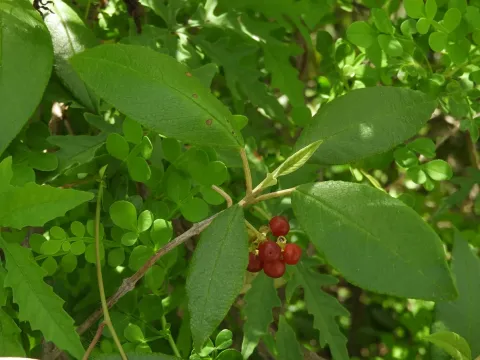
Petitia
Petitia
Petitia is a genus of trees and shrubs belonging to the Lamiaceae family. Historically, this genus was associated with the Verbenaceae family due to its morphological characteristics, but modern taxonomy places it within the Lamiaceae.
What the section contains

Petitia
The native range of Petitia includes the islands of the Caribbean, such as Cuba, Hispaniola, and Puerto Rico. These plants are native to tropical forests, where they serve as key components of the local woody vegetation.
In terms of soil requirements, Petitia thrives in a variety of substrates, including limestone-derived soils. Good drainage is essential to prevent root rot, as the plant prefers humid but not waterlogged environments.
The climate requirements involve consistent tropical temperatures without exposure to frost. Being a heliophilous species, it requires direct sunlight for optimal photosynthetic activity and structural development.
Standard silvicultural practices for this genus involve nursery propagation followed by transplanting into plantation sites with adequate spacing to minimize competition for nutrients and light.
The primary economic use of Petitia lies in its timber. The wood is highly regarded for its density, hardness, and durability, making it suitable for high-quality carpentry and furniture construction.
Due to its natural resistance to decay, the timber is often utilized in heavy construction and outdoor projects, where structural integrity is a significant requirement over time.
Harvesting strategies are typically focused on sustainable forestry, ensuring that selective cutting practices protect the younger tree cohorts and maintain long-term forest health.
Processing the raw timber involves systematic cutting and seasoning to ensure the wood reaches the appropriate moisture content for industrial applications in the local manufacturing sector.
Seed harvesting is conducted to support reforestation programs. Identifying healthy parent trees is critical to ensure high genetic quality and resilience in the resulting forest stands.