
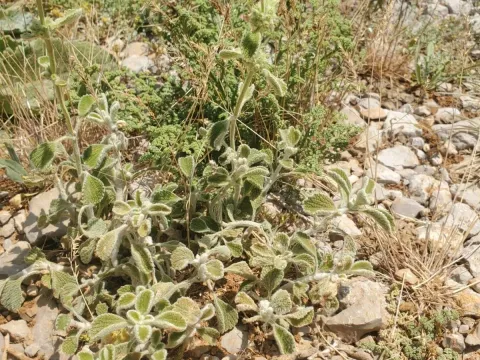
Horehound (Marrubium cuneatum)
Marrubium cuneatum
The sowing of Marrubium cuneatum is best performed in the spring when soil temperatures reach 10–12 degrees Celsius. The seeds exhibit high viability, but cold stratification can significantly improve germination energy for uniform emergence.
What the section contains
Horehound (Marrubium cuneatum)
For efficient industrial cultivation, row seeding with inter-row spacing of 45–60 centimeters is recommended. This allows for mechanical inter-row cultivation and proper weed control throughout the early growing season.
Seeds should be planted at a shallow depth of 1–1.5 centimeters. Deep sowing is detrimental, as the small seeds may fail to emerge if buried too deeply, resulting in sparse plant density and uneven stands.
Transplanting seedlings is a viable alternative to direct seeding, especially for ensuring optimal spacing. Seedlings are typically moved to the field once they develop 3–4 true leaves and are hardened off.
Avoid planting on the same site for at least 3–4 years to manage soil-borne pathogen levels. Cereal crops or clean fallows serve as excellent predecessors to reduce weed pressure and soil exhaustion.
Marrubium cuneatum is a photophilous plant that requires significant sunlight for vigorous growth. Insufficient light leads to etiolated stems and a significant decline in the concentration of bioactive secondary metabolites.
The plant is not highly demanding regarding soil fertility, thriving in rocky or calcareous soils. The ideal soil pH ranges between 6.5 and 7.5, provided there is adequate drainage to prevent root rot.
The species possesses high drought resistance, attributed to the dense trichomes (hairs) on the leaves that reduce transpiration. Excessive soil moisture or waterlogging is highly destructive to its root system.
Nutrient management should focus on balanced feeding with a preference for phosphorus and potassium. Excessive nitrogen can lead to excessive vegetative growth at the expense of oil and compound concentration.
While the plant is quite hardy, it appreciates some protection in regions with extreme winter cold. It is well-adapted to semi-arid climates and can withstand significant temperature fluctuations typical of its natural habitat.
Yields of the aerial part of Marrubium cuneatum depend on proper harvest timing and site management. The best time for harvest is the early flowering stage when essential oil and flavonoid levels are at their peak.
With proper care and favorable conditions, the yield of dried herb can reach 1.5–2 tons per hectare by the second year. Productivity generally remains stable for several years following establishment.
Quality is dictated by the density of diterpenoids and tannins present in the harvested material. Drying in shaded, well-ventilated areas at temperatures below 40 degrees Celsius preserves these delicate phytochemicals.
Seed harvest should be done selectively to avoid excessive shattering. Since maturity is often uneven across the plant, a two-phase harvesting process is frequently employed to ensure maximum recovery.
Maintaining a weed-free environment and monitoring for nutrient deficiencies throughout the season are essential steps to ensure high-quality produce that meets pharmacological and market standards.
Root rot is the most significant threat, typically caused by poor drainage or overwatering. Maintaining soil aeration and selecting well-draining sites are the most effective preventive measures against these pathogens.
Powdery mildew may occur in conditions of high humidity and poor air circulation. Proper thinning of the plants and removing infected foliage immediately can prevent the spread of fungal infections within the crop.
Leaf-eating insects, such as moths and various beetles, can cause significant damage to the vegetative foliage. Integrated pest management, including biological controls, is preferred to maintain crop safety.
Aphid colonies may target the developing shoots, sucking plant juices and hindering flower production. Regular monitoring is advised, especially during the peak growth months, to address infestations early.
- Wireworms, which may damage the root systems in newly cleared or unmanaged land.
- Nematodes, which can cause severe growth suppression in heavy, clay-rich soil types.
- Rust fungi, which thrive under conditions of stagnant air and high moisture.
Timely harvest of Marrubium cuneatum is critical for ensuring the potency of the medicinal herb. Harvesting should take place during the onset of flowering to capture the plant at its chemical peak.
Immediately after cutting, the material must be moved to a drying facility. Prolonged exposure to direct sunlight on the field causes rapid degradation of essential oils and other valuable compounds.
For large-scale operations, mechanical mowers set to a height of 10–15 centimeters are used. This leaving of basal growth ensures the plant's ability to recover for subsequent regrowth cycles.
Seed harvesting requires gentle handling to prevent seed loss due to the pods opening prematurely. Drying should be done on racks with mesh bottoms to facilitate uniform airflow and moisture reduction.
Post-harvest processing includes cleaning the product of debris and storing it in a cool, dark, and dry environment. High-quality packaging is necessary to maintain the shelf life and potency of the finished herbal product.