
Leucas neuflizeana
Leucas neuflizeana
Description
Growing requirements
Leucas neuflizeana is a herbaceous plant belonging to the Lamiaceae family. It is primarily found in African regions, where it has evolved to thrive in environments with distinct wet and dry seasons, showing remarkable resilience to arid conditions.
The plant requires well-drained, sandy, or rocky soil types. It is not tolerant of waterlogged conditions, which can lead to rapid root degradation. Optimal soil pH for this species is slightly alkaline to neutral, mimicking its native habitat.
Regarding climate, this crop performs best in warm to hot weather, with temperatures ranging from 22°C to 30°C. It is an heliophilic plant, meaning it requires abundant sunlight throughout the day to ensure the proper development of its secondary metabolites.
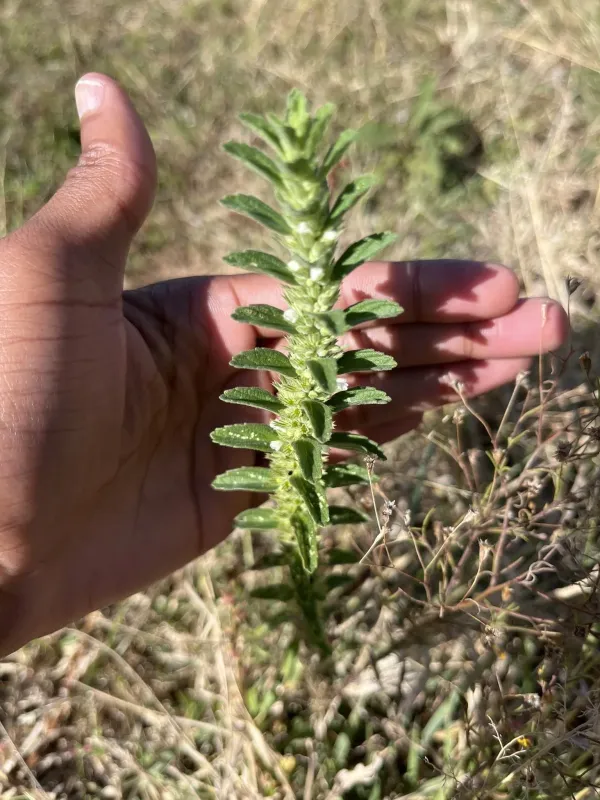
Botanically, Leucas neuflizeana is characterized by its square-shaped stems and opposite leaves, which are standard for the Lamiaceae family. The flowers are typically arranged in dense axillary whorls, which are often covered in fine, protective hairs.
For large-scale agricultural production, irrigation should be carefully managed to maintain low soil moisture levels after the initial establishment phase. Proper spacing between plants is also essential to allow for adequate airflow, which prevents leaf humidity and fungal growth.
Main diseases and pests
The primary threats to Leucas neuflizeana cultivation are fungal pathogens, specifically those causing root rot and damping-off. High humidity combined with poor soil drainage is the leading cause of these physiological and pathological issues.
Common agricultural pests affecting this species include aphids, spider mites, and various lepidopteran larvae. These pests feed on the foliage and tender stems, causing significant damage that reduces both growth rate and the quality of essential oils.
Integrated Pest Management (IPM) strategies are highly recommended to control these threats. This includes the use of beneficial predatory insects and the application of organic botanical pesticides when threshold levels of infestation are reached.
Regular field scouting is crucial for detecting early signs of infestation or infection. Once identified, affected plants should be isolated or removed to prevent the spread of disease, especially in dense planting setups.
Maintaining a clean, weed-free environment is also necessary as weeds can serve as alternative hosts for both pests and viruses that target Leucas neuflizeana. Proper crop rotation cycles help in breaking the life cycles of soil-borne pathogens.