
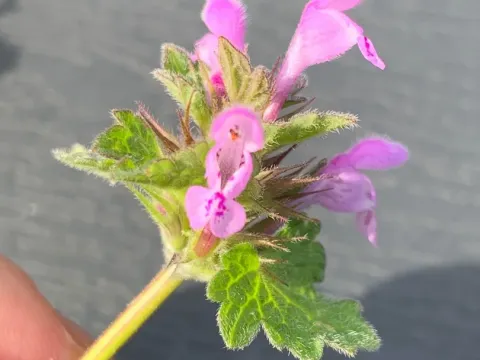
Northern dead-nettle
Lamium confertum
Northern dead-nettle (Lamium confertum) is an annual herbaceous plant belonging to the Lamiaceae family. It is widely distributed across temperate regions, often colonizing cultivated lands, gardens, and waste areas with moist, nutrient-rich soil.
What the section contains
Northern dead-nettle
The plant is easily identified by its square stems and opposite leaves. The flowers are arranged in dense clusters at the top of the stem, which is a distinctive morphological trait that differentiates it from other related species within the genus.
Regarding climatic requirements, the plant thrives in cool to moderate temperatures and requires consistent moisture for germination. It is particularly competitive in early spring, utilizing residual nutrients in the soil to establish itself rapidly.
In agriculture, it is often classified as a weed. Its high reproductive rate, driven by significant seed production, allows it to persist in fields where standard tillage practices are not consistently applied or during periods of crop dormancy.
While considered a weed, it serves as a source of nectar for early-season pollinators. However, farmers prioritize its management to prevent competition with primary crops for light, water, and essential soil minerals.
Pathogenic threats include various fungal infections such as powdery mildew, which can cover the foliage and hinder the plant's photosynthetic activity during periods of high humidity and poor air circulation.
Northern dead-nettle can act as an alternate host for pests and viruses, potentially spreading them to adjacent vegetable or cereal crops. This makes its presence in buffer zones a concern for integrated pest management.
Typical insect pests include leaf-feeding beetles and aphids. While these rarely eliminate the plant population entirely, they contribute to the biological stress imposed on the weed within the crop ecosystem.
Control methods rely heavily on mechanical weeding, including hoeing and cultivation. Timing these interventions before seed set is critical to reducing the soil seed bank for the following growing season.
Chemical control involves the application of selective herbicides tailored to target broad-leaved weeds. Best results are achieved when the plant is in its early growth stages, before it reaches full maturity.