
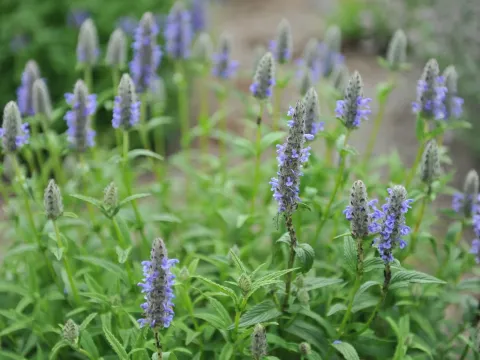
Nervosa catmint
Nepeta nervosa
Nervosa catmint (Nepeta nervosa) is a hardy perennial belonging to the Lamiaceae family. Originally native to the mountainous regions of Central Asia, it has gained popularity as an ornamental and medicinal crop due to its attractive spikes and drought tolerance.
What the section contains
Nervosa catmint
Sowing in open fields should occur in mid-spring when the soil has warmed to at least 10-12 degrees Celsius. Alternatively, seeds can be sown in late autumn to benefit from natural stratification, which improves germination rates in the following spring.
For greenhouse cultivation, seeds are sown in early March. Because the seeds are extremely fine, they should be surface-sown or covered with a very light layer of vermiculite or sand, ensuring they remain exposed to sufficient light for optimal germination.
Once seedlings develop two sets of true leaves, they are ready for transplanting. A standard spacing of 30x40 centimeters is recommended to allow each plant sufficient room for root expansion and foliage growth, reducing the risk of fungal diseases.
Vegetative propagation via root division is a highly effective method for expanding existing plantations. Dividing the clumps in either early spring or autumn ensures that the new plants inherit the exact characteristics of the parent stock.
This species thrives in full sun, which is crucial for maximizing its essential oil content and ensuring vibrant floral displays. Partial shade may result in weaker stems that are prone to lodging and reduced medicinal efficacy.
The ideal soil is sandy loam with excellent drainage. While Nepeta nervosa is tolerant of various soil types, it absolutely requires a well-drained substrate to prevent root rot during wet periods, which is the primary cause of plant failure in agricultural settings.
Once established, the plant is remarkably drought-tolerant. Irrigation is mainly required during the first weeks after planting and during prolonged dry spells in late spring to support the development of the root network.
Low-input maintenance is a key benefit of this crop. Beyond basic weeding during the first season and occasional fertilization with balanced NPK minerals in the spring, the plant requires very little interference to produce high yields.
The plant demonstrates significant winter hardiness, surviving temperate zone frosts without protective cover. However, fields should be cleared of excessive stagnant water before winter to ensure the root crown remains healthy until the next growing season.
The primary yield from this crop is biomass intended for oil extraction or dried herb markets. Harvesting at the peak of flowering ensures the highest concentration of volatile oils, typically resulting in yields of 150-250 decitonnes per hectare.
As a notable melliferous plant, it provides a high-quality nectar source for apiaries. The presence of Nervosa catmint fields significantly boosts local pollination services, often resulting in higher yields for neighboring vegetable and fruit crops.
Seed production is another viable revenue stream for farmers. With proper management, yields of 200-400 kilograms of high-germination seed per hectare can be achieved, provided the harvesting schedule is strictly aligned with seed maturity.
Regular pruning of spent flower stalks is a standard technique used to encourage a second flush of flowers later in the summer. This practice effectively extends the harvest window and increases the total vegetative yield of the plantation.
The longevity of the crop allows for a single planting to remain productive for up to 7 years. This reduces annual cultivation costs related to soil preparation and re-seeding, enhancing the economic sustainability of the agricultural operation.
The crop is relatively resistant to pests, but occasional infestations of aphids or leaf-eating beetles may occur. In commercial fields, biological control agents or targeted botanical extracts are preferred over synthetic pesticides to preserve product purity.
Powdery mildew is the most common fungal threat, particularly in humid climates with poor airflow. Maintaining correct row spacing and eliminating weeds between rows are the most effective preventative measures against this disease.
Root rot is almost exclusively caused by poor soil drainage. If the plantation is located in an area with a high water table, building raised beds is a necessary agronomic adjustment to ensure the long-term health of the crop.
Because the foliage contains compounds that naturally repel many garden pests, Nepeta nervosa is an excellent candidate for integrated pest management (IPM) strategies, functioning as a buffer crop in diversified organic farms.
Vigilance is required regarding soil pathogens. Crop rotation is advised after the 7-year production cycle concludes to prevent the build-up of specific soil-borne diseases that could affect other members of the Lamiaceae family.
Mechanical harvesting is conducted using tractor-mounted mowers set to leave a stubble height of 10-15 centimeters. It is imperative to perform the harvest on a dry, sunny day to prevent fermentation in the cut biomass.
Drying must be completed in shaded, well-ventilated structures. Excessive heat or direct sunlight will degrade the delicate aromatic compounds, so maintaining temperatures below 40 degrees Celsius during the drying process is critical.
Seed harvesting typically involves a two-step process: cutting the mature seed stalks and allowing them to dry in windrows before threshing. This ensures minimal seed loss and a cleaner, more efficient extraction process.
After processing, the material is stored in humidity-controlled environments. Using airtight packaging for the dried herb preserves the potency of the essential oils for up to a year, ensuring the product meets high market standards.
Late-season cleaning of the fields involves mowing down the remaining foliage and removing large debris. This clear-out process prevents the accumulation of overwintering pathogens and sets the stage for a strong start in the following spring.