
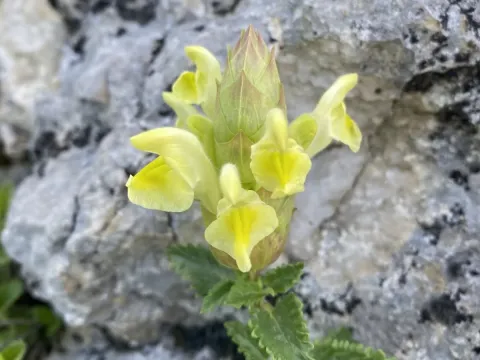
Oriental skullcap
Scutellaria orientalis
Oriental skullcap (Scutellaria orientalis) is a perennial herbaceous plant from the Lamiaceae family. It typically grows as a small shrub or mat-forming perennial, reaching heights of 10 to 40 cm depending on growing conditions.
What the section contains
Oriental skullcap
The plant originates from rocky mountain slopes and steppes of the Caucasus and Asia Minor. This evolutionary history dictates its preference for well-drained, nutrient-poor, and alkaline soils where water drainage is efficient.
It is a highly drought-tolerant and cold-hardy species, making it an excellent candidate for cultivation in arid regions. Full sunlight exposure is a mandatory requirement for the optimal production of secondary metabolites in the plant tissues.
In cultivation, it requires minimal fertilization as excess nutrients often lead to lush but weak vegetative growth, which is undesirable for medicinal quality. Providing a stony or sandy substrate is the best approach for mimicking its native habitat.
The main commercial value lies in its roots and aerial parts, which are extracted for pharmaceutical purposes due to their therapeutic potential in sedative and anti-inflammatory applications.
Root rot caused by stagnant water remains the most significant threat to Oriental skullcap crops. Overwatering leads to soil saturation, which directly interferes with the oxygen supply to the roots and invites pathogenic fungi.
Powdery mildew can affect the foliage during periods of high humidity and poor ventilation. Maintaining adequate spacing between plants is crucial to ensure proper airflow and to mitigate the risks of fungal outbreaks.
Aphids are the primary insect pests that target the soft, growing tissues of the stems. If infestations occur, they can significantly stunt growth, requiring targeted interventions to protect the yield quality.
Spider mites are also a concern during hot, dry summer months. These pests suck cell sap from leaves, causing chlorosis and weakening the plant's overall photosynthetic capacity, which reduces root growth.
Consistent field monitoring for early signs of disease and pest damage is recommended. Integrated pest management (IPM) practices, such as removing debris and weeds, are essential for keeping the field healthy and productive.