

Reference · Crops
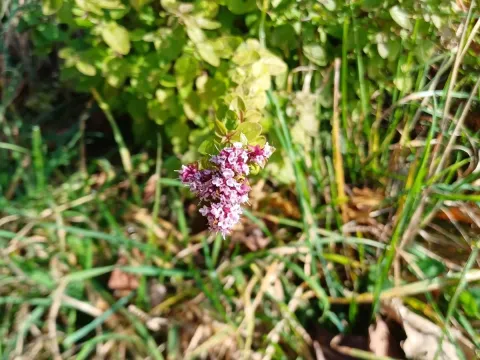
Oregano
Origanum L.
Oregano is typically propagated via seeds or vegetative division. Sowing should take place in early spring or late autumn depending on local climate conditions.
8
items
What the section contains
 Marjoram
Origanum majorana L.
Marjoram
Origanum majorana L.
 Oregano
Origanum vulgare L.
Oregano
Origanum vulgare L.
 Oregano
Origanum vulgare L. subsp. hirtum (Link) Ietsw.
Oregano
Origanum vulgare L. subsp. hirtum (Link) Ietsw.
 Oregano
Origanum vulgare L. subsp. vulgare
Oregano
Origanum vulgare L. subsp. vulgare
 Origanum scabrum
 Boiss. & Heldr.
Origanum scabrum
Origanum scabrum Boiss. & Heldr.
 Origanum syriacum
Origanum syriacum
Origanum syriacum
 Round-leaved oregano
Origanum rotundifolium Boiss.
Round-leaved oregano
Origanum rotundifolium x Origanum scabrum
Round-leaved oregano
Origanum rotundifolium Boiss.
Round-leaved oregano
Origanum rotundifolium x Origanum scabrum
Marketplace
Products in this section · 12


Oregano
When starting from seeds indoors, sowing in trays during early March is recommended, allowing seedlings to harden before being transplanted outside.
Optimal spacing is essential for crop health, with rows set 50–60 cm apart and plants spaced 30–40 cm within the rows to allow for air circulation.
Growth is notably slow during the first season, requiring careful weed management to ensure that young plants establish themselves without excessive competition.
As a perennial crop, oregano can remain productive for 5–7 years, though professional growers often rotate plots to maintain soil vitality and plant vigor.
Belonging to the Lamiaceae family, oregano thrives in sunny locations. Exposure to full sunlight is critical for maximizing essential oil production and flavor.
The plant prefers well-drained, sandy loam soils with a neutral pH level, though it is quite adaptable to different soil types if drainage is provided.
Oregano is remarkably hardy and can withstand varying climates, although it performs best in regions with warm, dry summers and moderate winters.
Excessive moisture is a significant risk for this crop, as waterlogged conditions lead to root rot and other fungal diseases, effectively killing the plant.
Routine maintenance during the growing season involves light irrigation to keep the soil consistent, avoiding drought stress while preventing saturation.
Yield capacity is influenced by soil fertility, light intensity, and plant maturity, with the second year typically providing the most robust harvests.
Industrial yields generally range from 1,500 to 3,000 kilograms of dry mass per hectare, depending on local climate and management practices.
The highest quality of dried herb is obtained by harvesting during the peak flowering stage, which ensures maximum essential oil concentration.
In intensive production systems with optimal irrigation, two harvests per season are achievable if the climate allows for rapid regrowth after the initial cut.
Balanced fertilization with nitrogen for leaf development and potassium for bloom support is recommended to maximize overall productivity per hectare.
The most significant threats to oregano are fungal pathogens, specifically those causing root rot and damping-off when soil moisture remains too high.
Powdery mildew can emerge in overcrowded or poorly ventilated plantings, necessitating better spacing or the application of preventative fungicidal treatments.
Common pests include aphids and spider mites, which can cause significant damage to the foliage and reduce the overall health and yield of the herb.
Control strategies involve strict adherence to crop rotation, regular removal of host weeds, and utilizing integrated pest management for long-term health.
Preventative measures are essential, as once infestations or infections take hold, the quality of the essential oils for commercial use can be compromised.
Harvesting should be timed precisely with the full flowering period, when the plant's aromatic compounds are at their peak for commercial quality.
Stems should be cut approximately 20 cm from the ground using sharp tools to ensure the plant remains intact for subsequent regrowth throughout the season.
Post-harvest handling must be quick to prevent volatile oil loss, ideally moving the harvested mass immediately to shaded, cool storage or drying facilities.
Drying is performed in controlled environments with temperatures maintained below 40 degrees Celsius to preserve the integrity of the herbs and their oils.
After reaching the desired moisture content, the crop is threshed to separate leaves from stems, then packaged in airtight containers for optimal storage.