
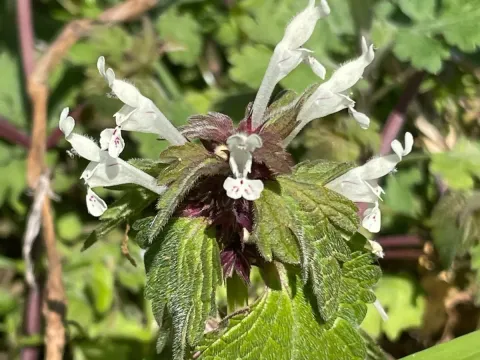
Bifid dead-nettle
Lamium bifidum
Bifid dead-nettle (Lamium bifidum) is a herbaceous annual plant belonging to the Lamiaceae family. Often considered a weed in agricultural settings, it thrives in environments that provide consistent moisture and high levels of soil nutrients.
What the section contains
Bifid dead-nettle
The species is native to temperate climates where it has adapted to live in disturbed soils, such as field edges and croplands. It is highly competitive in rich, loamy soils, where it can quickly establish itself by taking advantage of favorable growing conditions.
The botanical structure of Lamium bifidum is characterized by square stems, opposite leaves, and distinctive zygomorphic flowers arranged in whorls. These structures are typical for the mint family and help in identifying the species during its vegetative growth phase.
Regarding soil requirements, the plant prefers fertile, well-drained habitats that are not prone to extreme drought. While it is adaptable, it performs best in sheltered locations and is often found in agricultural buffer zones where competition for resources is moderated.
Although it is not a commercial crop, the bifid dead-nettle serves an important ecological role as an early-season nectar source for bees and other pollinators. This makes it a component of natural biodiversity that supports local ecosystem health.
The primary management strategy for bifid dead-nettle in intensive farming involves the use of selective herbicides. Proper timing of application ensures the reduction of weed pressure while protecting the target agricultural crop from interference.
The plant is susceptible to powdery mildew, especially during seasons with high humidity and limited airflow. This fungal infection can severely damage leaf tissue, leading to a reduced photosynthetic capacity and overall decline of the weed population.
Insect pests, including various species of aphids, frequently colonize the tender tips of the plant. These pests feed on phloem sap, which can weaken the plant and indirectly facilitate the spread of secondary viral infections.
Root rots are common in areas with poor drainage or over-irrigation. Waterlogged conditions create an environment where soil-borne pathogens flourish, potentially killing the plant by restricting oxygen uptake at the root level.
Mechanical cultivation practices, such as harrowing and plowing, remain the most effective non-chemical methods for controlling this plant. Disrupting the soil profile prevents seeds from germinating and eliminates existing plants, thereby preventing seed bank enrichment.