
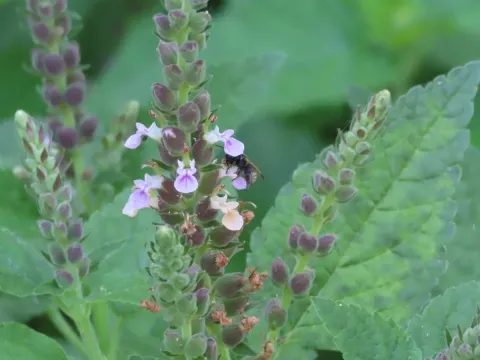
Bladder germander
Teucrium vesicarium
Bladder germander (Teucrium vesicarium) is a member of the Lamiaceae family. It is a hardy perennial herb that thrives in dry, rocky, and sun-drenched environments, showcasing remarkable adaptability to arid conditions.
What the section contains
Bladder germander
The plant requires full sun exposure for optimal growth and secondary metabolite production. Lack of light results in elongated, weak stems and reduced flowering, which decreases both aesthetic and medicinal value.
Soil drainage is the most critical factor for successful cultivation. The plant prefers light, sandy, or stony substrates. Heavy, water-retentive soils must be amended with grit or perlite to prevent root asphyxiation and rot.
Regarding agrotechnics, the crop is relatively low-maintenance once established. It requires minimal irrigation, as it is drought-tolerant. Periodic weeding is essential during the early stages of plant development.
In terms of usage, the plant serves both medicinal and decorative purposes. Its unique morphology makes it an excellent candidate for xeriscaping, while its chemical profile remains of interest to pharmacological studies.
Root rot is the primary physiological threat caused by overwatering or poor soil drainage. Ensuring that the substrate remains well-drained during dormant seasons is vital for plant survival.
Pests such as aphids and spider mites can colonize the foliage during high-temperature periods. Integrated pest management, focusing on early detection, is the recommended approach for control.
Fungal diseases like powdery mildew may affect the foliage if the air circulation is poor. Planting density should be carefully managed to ensure sufficient airflow between individual plants.
Leaf spot infections can occur in humid, stagnant conditions. Removal of debris and old foliage at the end of the season significantly reduces the inoculum of potential pathogens.
Proper nutrient management is necessary to avoid excessive nitrogen application, which can lead to succulent growth and increase the susceptibility to various sucking insects and fungal infections.