
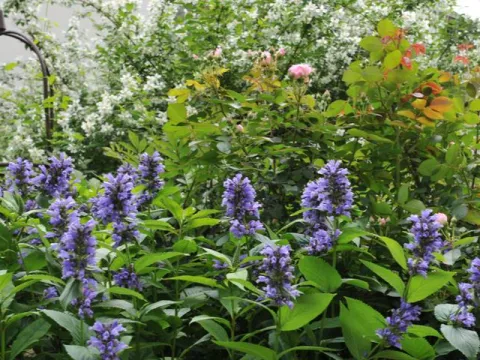
Blue catmint
Nepeta caerulea
Blue catmint seeds are sown primarily in the spring, once the soil temperature reaches 8–10 degrees Celsius. For uniform germination, row sowing with spacing of approximately 45–60 centimeters is preferred.
What the section contains
Blue catmint
The seeding depth should be 1–2 centimeters, as the seeds are quite small and require good contact with moist soil. During sowing, it is important to ensure the seeds are firmly pressed into the ground for optimal moisture uptake.
Cultivation via seedlings in trays or greenhouses is also possible, with transplanting occurring at the 3–4 true leaf stage. This method allows for a more consistent and earlier crop establishment in industrial fields.
After sowing, rolling the field is recommended to improve capillary water movement, which is critical for the germination of small seeds under varying soil moisture conditions.
Maintaining optimal plant density is essential to ensure good airflow, which prevents the development of fungal infections in dense plantings during the first half of the vegetation period.
Blue catmint belongs to the Lamiaceae family and is a perennial plant that thrives in open, sunlit areas. The plant exhibits high drought resistance and winter hardiness, typical for species adapted to temperate climates.
The best soils for cultivation are fertile loamy or sandy chernozems with a neutral to slightly alkaline reaction. Heavy clay soils with stagnant water negatively affect root development and can lead to plant rot.
The crop is highly responsive to potassium-phosphorus fertilizers, which promote better shoot maturation and the accumulation of essential oils. Nitrogen fertilizers are applied moderately, primarily at the beginning of the growing season to boost vegetative growth.
A key factor for success is the absence of competition from weeds, especially during the first year of growth when the catmint develops slowly. Regular mechanical cultivation between rows helps keep the soil loose and aerated.
While the plant is quite tolerant of short-term drought, industrial production aiming for maximum green mass yield requires maintaining a stable moisture level during critical growth phases.
The commercial use of Blue catmint focuses on harvesting the aerial parts of the plant, which contain valuable essential oils and flavonoids. The green mass yield depends heavily on the age of the plantation and the agricultural background.
During the first year after planting, yields are usually lower as the plant invests energy into root system development. In the second and third years, with proper care, maximum dry raw material yields can be expected.
Essential oil productivity varies by growth stage: the highest concentrations of aromatic compounds in the inflorescences are typically reached during the peak flowering period.
Efficient yield management includes fertilization after each harvest, provided that climatic conditions allow for two cuttings within a single growing season.
The overall yield also depends on the quality of the seed material and plant density per hectare, requiring adherence to established spacing protocols for specific cultivation regions.
Common pests of catmint include various aphid species, which can damage young shoots during dry spells. Biological pest control or approved insecticides are recommended to manage population levels.
Fungal diseases, such as powdery mildew, may affect plants under conditions of excessive humidity and dense spacing. Prevention involves following agricultural best practices and ensuring sufficient airflow within the crop.
Root rot poses a threat in waterlogged areas with poor drainage systems. Avoiding water stagnation and implementing proper crop rotation are the best defense measures against these pathogens.
Insect pests can damage inflorescences, reducing both the biomass and potential seed yield. Regular field monitoring allows for timely intervention against pest infestations.
- Aphids
- Powdery mildew
- Root rot
- Leaf beetles
Harvesting should occur during the full flowering phase when essential oil content is at its maximum. In industrial settings, mowers are adjusted to cut the aerial mass at a height of 10–15 centimeters above ground level.
The harvested material must be promptly transported to the processing or drying facility to prevent self-heating and the loss of volatile aromatic components.
Drying is carried out in specialized facilities at temperatures not exceeding 40–45 degrees Celsius to preserve biological activity and the product's commercial appearance.
When producing essential oil via steam distillation, the raw material should be processed immediately after harvesting to ensure high-quality output with the desired aromatic profile.
Following the main harvest, the plantation is cleared of plant debris, and the inter-row spaces are cultivated to prepare the plants for overwintering and regrowth in the following season.