
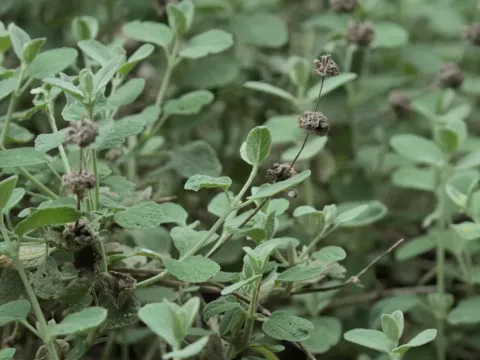
False dittany
Ballota pseudodictamnus
Sowing seeds of Ballota pseudodictamnus is typically done in early spring, during March or April, within a protected environment such as a greenhouse to ensure steady seedling development. The seeds benefit from a period of stratification, meaning that autumn sowing in open soil often results in better germination rates the following spring.
What the section contains
False dittany
The plant can also be effectively propagated through cuttings. Semi-hardwood cuttings should be taken in late summer or early autumn, providing them with high humidity and stable temperatures to ensure successful rooting before the winter dormant season.
Transplanting seedlings into their permanent growing site is performed once the danger of frost has passed. The optimal density is about 4–6 plants per square meter, ensuring enough space for proper airflow, which is critical for preventing fungal issues.
When sowing directly into the ground, choose warm and sunny locations, as the seeds require soil temperatures between 15 and 18 degrees Celsius for uniform germination.
The plant exhibits slow growth during its first year, so consistent weed management and maintenance of soil moisture are essential until the plant is fully established in the landscape.
Ballota pseudodictamnus is a member of the Lamiaceae family and originates from the Mediterranean region, which dictates its high requirement for light. It thrives in open, sunny locations protected from harsh, cold winds.
It is not demanding regarding soil composition, though it performs best in light, sandy, or rocky substrates with a neutral to slightly alkaline pH. Excellent drainage is vital, as stagnant moisture around the root zone is detrimental to the plant's health.
This crop is highly drought-tolerant, making it an excellent candidate for regions with hot, dry summers. Overwatering or heavy fertilization should be avoided, as these can make the stems succulent, weak, and less likely to retain their characteristic silvery pubescence.
Cold hardiness is limited; in cooler climates, the plant requires winter protection or should be grown in containers that can be moved to a cool, frost-free location during the winter months.
Minimal fertilization is required for cultivation. Over-rich soils, particularly those high in nitrogen, can cause the plant to lose its compact growth habit and become more susceptible to crown rot.
The commercial use of Ballota pseudodictamnus is primarily focused on the harvest of its biomass for use in landscaping and the floristry industry. A single mature bush can produce significant amounts of harvestable material by the second year of growth.
The main commercial value lies in the velvety, silver-toned stems and leaves, which retain their unique aesthetic structure even after being dried. Pruning throughout the growing season stimulates lateral branching and increases the total harvestable biomass.
The plant also possesses medicinal potential due to its concentration of terpenoids and phenolic compounds. Harvesting for medicinal purposes should be performed during the peak flowering phase when the concentration of secondary metabolites is at its maximum.
To maintain high yields, the plants should be rejuvenated by heavy pruning every 3–4 years, as older bases tend to become overly woody and less productive in leaf generation.
Overall plantation productivity is heavily dependent on sunlight intensity, which directly influences the density of the silver hairs on the leaves, thereby affecting the visual quality of the final product.
The primary threats to Ballota pseudodictamnus are fungal pathogens, which proliferate in conditions of high humidity and poor air circulation. Root rot is a major risk in waterlogged soils.
Pests such as aphids and spider mites are common, particularly during extended dry spells. Regular inspection of the foliage is necessary to detect infestations before they spread across the entire plantation.
Powdery mildew may occur during periods of extreme temperature and humidity fluctuations, requiring preventative applications of bio-fungicides at the beginning of the growing season.
Excessive humidity during the winter months can lead to mold growth on the dense, hairy leaves, so maintaining dry, cool conditions is critical for winter survival.
- Root rot (Rhizoctonia)
- Powdery mildew
- Aphids
- Spider mites