
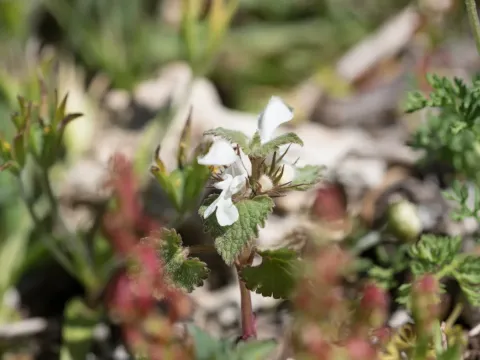
Lamium moschatum
Lamium moschatum
Lamium moschatum is a perennial herbaceous plant belonging to the Lamiaceae family, native to Mediterranean climates. In cultivation, seeds should be sown in autumn or early spring into well-prepared, loose soil with excellent drainage.
What the section contains
Lamium moschatum
To improve germination rates, seeds may require a short period of stratification. Sowing depth should be shallow, approximately 1–2 centimeters, ensuring the seeds maintain consistent soil contact.
The optimal planting density involves maintaining 30–40 centimeters between rows, allowing the plants to develop a healthy, bushy habit without excessive competition for nutrients.
For spring sowing, it is essential that the soil temperature reaches at least +10...+12 degrees Celsius to ensure rapid establishment and reduce the risk of pathogen exposure.
Transplanting seedlings started in greenhouse conditions can be beneficial for larger scales, though direct field seeding is highly successful when moisture is managed effectively during the early development stage.
The crop thrives best in partial shade, as prolonged exposure to intense, direct midday sun can lead to leaf scorching and a reduction in the concentration of essential aromatic oils.
Lamium moschatum requires fertile, loam-based soils with a neutral to slightly alkaline pH. Proper aeration and drainage are vital to prevent root zone suffocation.
Irrigation should be consistent but moderate. While the plant appreciates moisture, it is highly sensitive to waterlogging, which often leads to root rot and other fungal diseases.
Regarding climate, the plant is moderately hardy but benefits from a protective mulch layer during extremely cold, snowless winters to prevent root desiccation.
Improving the soil structure with organic matter prior to planting provides the necessary nutrients for the sustained growth of the perennial root system over multiple seasons.
The primary threats to Lamium moschatum include various fungal infections, particularly those triggered by poor ventilation and excessive surface moisture in dense plantings.
Powdery mildew represents a significant risk, appearing as a white, dusty layer on the foliage, which severely limits the photosynthetic capacity and aesthetic value of the crop.
Pests such as aphids and spider mites are common, often congregating on the undersides of leaves and extracting plant sap, which leads to stunted growth and leaf deformation.
Integrated pest management, including the application of organic insecticides and maintaining proper plant spacing, is essential for keeping these populations under control.
- Regular soil cultivation to maintain aeration
- Manual weeding to reduce competition
- Strategic pruning to improve air circulation
- Monitoring for early signs of fungal growth
Harvesting for medicinal or aromatic use is best performed during the peak flowering phase, when the accumulation of bioactive compounds and essential oils is at its highest.
The aerial parts are harvested by cutting stems about 5–7 centimeters above the ground, which allows for secondary growth and potential subsequent harvests later in the season.
Drying must be conducted in a cool, dark, and well-ventilated area to preserve the delicate musk-like fragrance that gives the species its name.
With proper care and adequate fertilization following the first harvest, it is possible to achieve two harvests per year, depending on the length of the growing season.
Post-harvest storage should involve airtight containers protected from direct sunlight to ensure the long-term stability of the volatile compounds and overall quality of the product.