
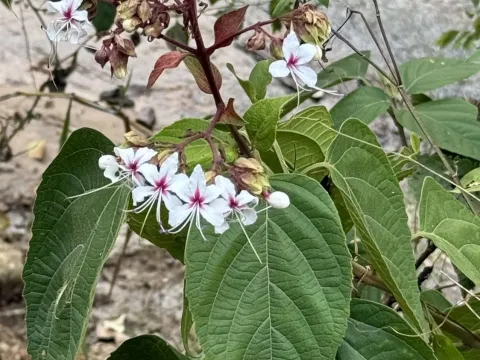
Clerodendrum infortunatum
Clerodendrum infortunatum
Clerodendrum infortunatum, a member of the Lamiaceae family, is a perennial shrub native to the tropical regions of Southeast Asia. This species is commonly found in tropical forests, waste grounds, and rural agricultural borders.
What the section contains
Clerodendrum infortunatum
The plant thrives in warm, humid climates with adequate rainfall. It requires well-drained, fertile soil rich in organic matter to achieve optimal growth. While it prefers full sun, the plant demonstrates good tolerance for partial shade conditions.
Cultivation practices involve maintaining soil moisture, especially during the early stages of growth. Propagation is typically achieved through seeds or stem cuttings, which allow for rapid expansion of the cultivated area in favorable environments.
Botanically, the plant features large, simple leaves and showy white flowers with reddish stamens. The shrub can grow up to 2 meters in height, providing a significant biomass yield that is highly valued in local pharmacopoeia.
Economic importance lies primarily in the medical field. Extracts from the roots and leaves are processed for their therapeutic properties, including antimicrobial and anti-inflammatory activities, which are well-documented in regional studies.
Major threats to Clerodendrum infortunatum production include fungal diseases such as leaf spots, particularly prevalent during the monsoon season.
Pests, including aphids, whiteflies, and various leaf-feeding caterpillars, pose a significant risk to plant vigor and total crop output.
Root rot is a critical threat when the soil drainage is inadequate, leading to waterlogging and subsequent plant decline within the agricultural plots.
Integrated Pest Management (IPM) is recommended to control these threats, prioritizing natural predators and organic biocontrol agents over chemical solutions.
Regular monitoring for early symptoms of nutrient deficiency and insect infestations is essential to ensure a high-quality harvest of the botanical materials.