
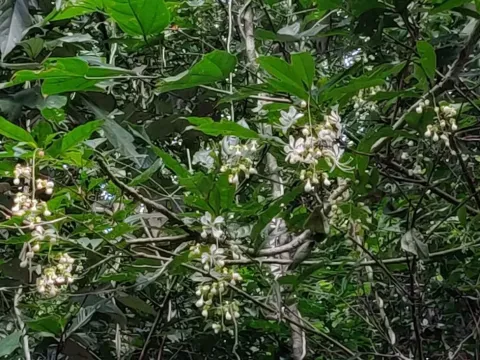
Clerodendrum nutans
Clerodendrum nutans
Clerodendrum nutans is a tropical flowering shrub belonging to the Lamiaceae family. Originally native to the regions of Southeast Asia and India, it is highly valued for its cascading clusters of white flowers.
What the section contains
Clerodendrum nutans
The crop thrives in temperatures between 20°C and 25°C. Maintaining a stable, warm environment is essential as this species is extremely sensitive to cold drafts and temperatures dropping below 15°C.
Soil requirements involve a well-draining, nutrient-rich substrate. A mixture of peat, perlite, and organic compost is recommended to ensure good aeration and adequate moisture retention for the roots.
Light management is crucial; Clerodendrum nutans prefers bright, filtered sunlight. Exposure to direct scorching sun in greenhouse conditions will cause leaf damage, necessitating the use of shading nets.
High humidity levels are a prerequisite for healthy growth. Producers should aim for 65–75% humidity, which can be achieved through automated misting systems to simulate the natural tropical habitat.
Common pests include spider mites and whiteflies, which typically infest the plant under conditions of low humidity and poor ventilation. Early detection is vital for crop protection.
Integrated Pest Management (IPM) strategies, including biological controls and targeted application of systemic insecticides, are the most effective way to manage these populations in a production setting.
Fungal issues, particularly root rot, are the primary disease threat. This is almost exclusively linked to overwatering and inadequate drainage systems in the nursery pots or beds.
Powdery mildew can occur during periods of high humidity and poor air circulation. Improving airflow between plants helps reduce the incidence and spread of this fungal pathogen.
Routine sanitation of the growing environment, including the removal of dead or decaying plant material, is essential to prevent the accumulation of pests and disease inoculum.