
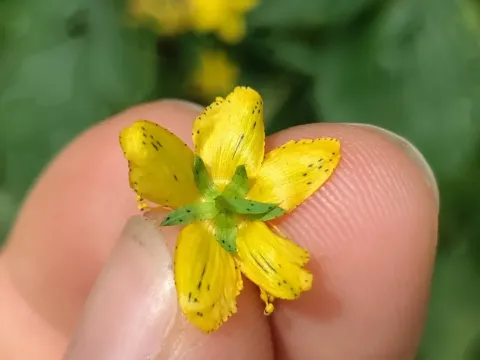
Desetangs St John's-wort
Hypericum desetangsii
Sowing of Desetangs St John's-wort is usually scheduled for early spring, once the soil has warmed up to at least 10 degrees Celsius. Late autumn sowing is also a viable option, allowing seeds to undergo natural stratification throughout the winter months.
What the section contains
Desetangs St John's-wort
Since the seeds are extremely small, they should be sown on the surface of the soil. They require light contact with the earth, often achieved by pressing them gently into the soil or covering them with a very thin layer of sand.
In commercial operations, rows are spaced approximately 45 to 60 centimeters apart. This spacing facilitates weed control and ensures adequate airflow between plants, which is vital for preventing moisture-related diseases.
Germination typically occurs within two to three weeks, provided that the soil remains moist. During the initial stages of development, it is crucial to protect the seedlings from desiccation caused by wind or intense sunlight.
Once the plants develop their first true leaves, thinning is recommended to ensure a density of about 20-30 centimeters between individual plants within the row for optimal growth.
Desetangs St John's-wort is a hybrid species resulting from the natural cross-breeding of common St John's-wort (H. perforatum) and square-stalked St John's-wort (H. tetrapterum). It belongs to the Hypericaceae family.
The plant thrives in full sun exposure, which is necessary for high concentrations of bioactive secondary metabolites. While it can tolerate partial shade, productivity significantly decreases in environments with low light levels.
Loamy or sandy soil types with efficient drainage are ideal for this culture. Waterlogging is detrimental to the root system, so fields with stagnant water must be avoided to ensure the longevity of the perennial stands.
A neutral to slightly acidic soil pH is preferred. Prior to planting, soil amendment with organic matter helps establish a robust root system, which is essential for the plant to survive and thrive for multiple years.
The species exhibits good winter hardiness within temperate climates, requiring no special coverage. The primary requirement for overwintering success is well-drained soil that prevents ice formation around the crown.
Yield potential increases as the plants mature, typically peaking in their second or third year of cultivation. In the first year, growth is prioritized towards the root system rather than above-ground biomass.
Average yield of dried aerial parts varies depending on climate and soil fertility. Proper agricultural practices allow for a consistent annual harvest of high-quality medicinal material throughout the lifespan of the crop.
Strategic fertilization with nitrogen and phosphorus at the beginning of the vegetative season boosts green mass production. However, caution is required to prevent over-fertilization, which could lower the quality of the harvested secondary metabolites.
Regular maintenance, including weeding and keeping the inter-row spaces clear, helps maintain yield levels. Competition from weeds is the most common cause of reduced productivity in early stages of plant development.
The harvest is usually done in a single or double cut per season. Second cuts should be managed carefully to ensure the plant has enough energy reserves to survive the coming winter without exhaustion.
Fungal diseases like rust and powdery mildew are the most prevalent threats. These conditions are exacerbated by high humidity and poor ventilation within the field, often occurring during rainy summer spells.
Root rot occurs if the soil remains waterlogged for extended periods. Implementing proper field drainage and avoiding low-lying areas are the most effective preventative measures against soil-borne pathogens.
Insects such as leaf beetles and caterpillars can cause significant damage to the leaves and flowers. Monitoring for these pests should be conducted frequently, especially as the plants enter the flowering phase.
Aphids might cluster on young shoots, weakening the plant and potentially spreading viral infections. Using biological control methods is preferred to maintain the chemical purity required for medicinal applications.
Cultural practices, such as maintaining appropriate plant spacing and rotating crops, are essential to minimize the need for chemical interventions and ensure the health of the perennial stand.
The optimal harvest window is at the onset of mass flowering, when most blossoms are open but not yet turning into seed heads. This timing ensures the highest concentration of active compounds, such as hypericin.
Only the top 20-30 centimeters of the plant are harvested. Using sharp harvesting tools is essential to leave the woody base intact, which allows the plant to recover quickly after the cut.
Harvesting must be performed on a dry, sunny day after the morning dew has evaporated. Wet plant material will inevitably spoil, blacken, and lose its medicinal efficacy if not processed immediately.
The harvested biomass should be spread out in a thin layer for drying in a shaded, well-ventilated area. If using mechanical dryers, the temperature must be kept under 45 degrees Celsius to protect heat-sensitive compounds.
Once fully dried, the material should be stored in a cool, dark, and dry environment to preserve its color, aroma, and therapeutic properties until it is ready for packaging or processing.