
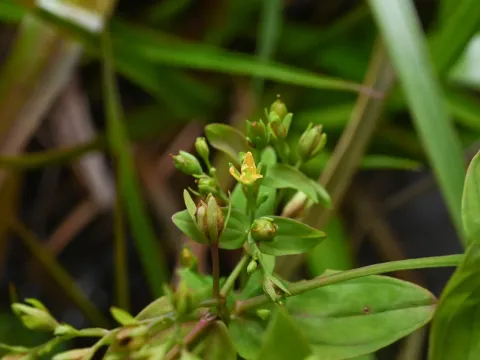
Dwarf St. John's wort
Hypericum mutilum
Dwarf St. John's wort (Hypericum mutilum) is a herbaceous plant species belonging to the Hypericaceae family. Unlike its larger relatives, this species is uniquely adapted to moist environments, making it a distinct subject within the genus.
What the section contains
Dwarf St. John's wort
Native to North America, this plant is naturally found in wetlands, swampy meadows, and along the edges of ponds or ditches. Its preference for moisture has defined its ecological niche and its requirements when introduced into cultivation in other temperate regions.
To successfully cultivate this species, consistent soil moisture is essential. The plant thrives in rich, moist soil and prefers areas that provide exposure to sunlight while ensuring that the root system remains hydrated throughout the growing season.
The botanical profile includes small, yellow flowers and opposite leaves often covered in translucent glands. The stems can be erect or sprawling, and the plant exhibits a delicate appearance that belies its ability to survive in competitive, damp ground habitats.
In terms of agricultural and practical use, Hypericum mutilum is primarily studied for its phytochemical properties. Researchers investigate its potential as a source of bioactive compounds, contributing to the broader understanding of plant-based secondary metabolites.
The primary threats to this culture are fungal infections, such as root rot and powdery mildew, which thrive in stagnant, poorly ventilated conditions. High humidity, while necessary for the plant, must be balanced with adequate airflow to prevent these pathogens.
Pests commonly affecting this species include aphids and spider mites, which feed on the sap of the tender shoots. These insects can reduce the vigor of the plant, especially if infestations occur during the critical early stages of vegetative development.
Competition from more aggressive weed species poses a constant threat in agricultural settings. Because Hypericum mutilum has a relatively modest growth rate, regular weeding is required to ensure it is not crowded out by vigorous, fast-growing grasses.
Rodent damage is another potential concern, as these animals often seek out damp environments for shelter. Their foraging can physically damage the stems and roots, providing entry points for secondary bacterial or fungal infections.
Effective management involves maintaining optimal spacing to promote air circulation and performing routine inspections to catch the early signs of pest or disease pressure, thereby ensuring the long-term health of the plant population.