
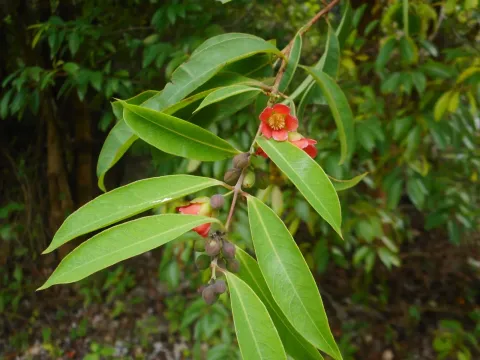
Cratoxylum
Cratoxylum
Cratoxylum is a fast-growing tropical tree genus, typically propagated by seeds in large-scale nursery operations for forestry or agroforestry projects.
What the section contains


Cratoxylum
Seeds are harvested from mature fruit capsules which release winged seeds upon drying, a mechanism that facilitates natural wind-borne dispersal.
For successful germination, seeds should be sown in a well-draining substrate rich in organic matter, maintaining consistent moisture and temperatures above 25°C.
Seedlings are transplanted to their permanent location at the onset of the rainy season to allow the root system to establish before the dry season arrives.
Planting density is determined by the specific land-use goal, with high-density spacing used for timber production and wider spacing for agroforestry systems.
The genus thrives in humid tropical climates characterized by consistently high temperatures and a regular distribution of rainfall throughout the year.
Cratoxylum shows significant adaptability to various soil conditions, including nutrient-poor loams and sandy soils, making it suitable for rehabilitating degraded land.
Adequate drainage is a primary requirement, as waterlogged conditions in the root zone can severely hinder development and lead to root decay.
As a light-demanding species, the trees require sufficient exposure to sunlight to maintain optimal growth rates and structural integrity during the establishment phase.
While the trees can tolerate short periods of drought, regular moisture is essential for maximizing biomass production and ensuring high-quality growth.
The primary economic value of Cratoxylum lies in its high-quality timber, which is widely utilized in both heavy construction and fine furniture manufacturing.
The species is highly productive in terms of biomass, serving as a reliable source for the production of high-grade charcoal with excellent thermal properties.
The young leaves and shoots of certain species are locally harvested as edible greens, providing an immediate food source and supplementary income for growers.
In integrated agroforestry systems, these trees contribute to nutrient cycling and soil organic matter accumulation, enhancing the productivity of companion crops.
Harvestable timber yields depend heavily on management practices and stand density, with selective thinning allowing for periodic returns several years after planting.
Young plantations are primarily susceptible to fungal infections, which often emerge in environments with poor air circulation and excessive soil humidity.
Leaf-eating insects can cause significant damage in nursery settings, potentially stunting seedling growth if not managed through integrated pest control strategies.
Root rot remains a critical physiological threat, usually associated with poorly selected sites that have heavy clay content or persistent water stagnation issues.
Mitigating these risks involves ensuring adequate spacing between trees to facilitate airflow and regular monitoring of plant health throughout the rainy season.
Sanitary pruning of damaged or infected branches is an essential cultural practice to prevent the spread of disease within a plantation.
Timber harvesting is conducted using mechanized tools once the trees reach the desired merchantable diameter, which usually occurs 10 to 15 years after planting.
Leaves and young shoots intended for culinary or fodder use are gathered manually throughout the growing season, using sustainable methods to protect the main structure.
Many Cratoxylum species possess a strong coppicing ability, allowing the stumps to regenerate new shoots after the primary harvest, reducing the need for replanting.
Seed harvesting requires precise timing, where fruit clusters are removed just before natural dehiscence to ensure the maximum recovery of viable seed lots.
Post-harvest timber management includes controlled air-drying to minimize surface checking and warping, ensuring the quality of the final wood products.