
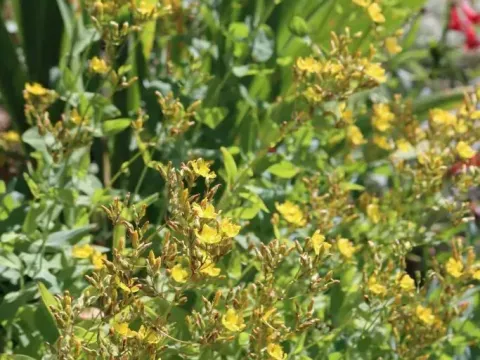
Dotted St. John's wort
Hypericum atomarium
Hypericum atomarium, belonging to the Hypericaceae family, is a herbaceous perennial that requires careful attention during the initial establishment phase.
What the section contains
Dotted St. John's wort
Direct sowing in the field is best performed in early spring or late autumn, providing seeds with a natural cold stratification period for better germination.
Seeds are tiny and should be sown on the surface of well-prepared soil, followed by light rolling to ensure good soil-to-seed contact without burying them too deep.
For greenhouse production, sowing begins in late winter, allowing seedlings to reach sufficient size for transplanting by the time frost risks have fully passed.
A plant spacing of approximately 30-45 cm within rows is recommended to allow for optimal airflow and prevent competition for nutrients between mature plants.
This crop thrives in full sun, which is critical for maximizing the concentration of phytochemicals in the harvested aerial parts of the plant.
Light, well-draining soils with a neutral pH are ideal; heavy or waterlogged soils should be avoided as they significantly increase the risk of root rot.
Although the plant is quite drought-tolerant once established, supplemental irrigation during the peak growing season ensures consistent biomass yield.
Cold hardiness is generally good, but in regions with harsh winters, mulching around the root zone helps protect the plant from severe temperature fluctuations.
Regular maintenance, including weeding during the first season, is essential as the plant grows relatively slowly during its initial stage of development.
The primary economic focus for Hypericum atomarium is the production of high-quality medicinal herb material for the pharmaceutical and supplement industries.
Sustainable biomass yield typically peaks in the second or third year of cultivation when the root system is fully developed and the crowns are robust.
Under optimal management conditions, expected dry matter yields range from 1.5 to 2.5 tonnes per hectare depending on crop density and fertilization practices.
Implementing a balanced fertilization schedule, particularly with phosphorus and potassium, encourages stronger flowering and better essential oil content in the herb.
Proper post-harvest handling is vital to preserve the vibrant color and medicinal potency, which remain stable for up to two years when stored in optimal conditions.
Root rot is the most significant disease risk, often triggered by excessive soil moisture and poor drainage in the field during the early stages of growth.
Powdery mildew may occur in periods of high humidity and low air circulation, potentially damaging the leaf surface and reducing the quality of the harvested crop.
Leaf-eating beetles are common pests that can quickly skeletonize leaves, thereby impacting the aesthetic and medicinal quality of the herbal product.
Aphid infestations on tender new shoots can suppress growth and cause leaf curling, requiring vigilant monitoring and timely intervention with organic pesticides.
Integrated pest management, including crop rotation and field hygiene, is the most effective way to minimize reliance on chemical treatments throughout the season.
Harvesting should be timed precisely during the peak flowering stage, as this is when the secondary metabolites are most concentrated within the plant tissues.
The stems are cut at a height of approximately 10-15 cm from the ground, ensuring that the basal part of the plant remains intact for subsequent regrowth.
Rapid transport to the drying facility is mandatory to prevent enzymatic degradation or overheating, which can lead to rapid loss of bioactive compounds.
Drying must be conducted in dark, airy environments at temperatures not exceeding 45 degrees Celsius to maintain the green color and high active ingredient content.
Final processing involves careful cleaning to remove debris, woody bits, and any contaminants, ensuring the final herb meets industry standards for purity and safety.