
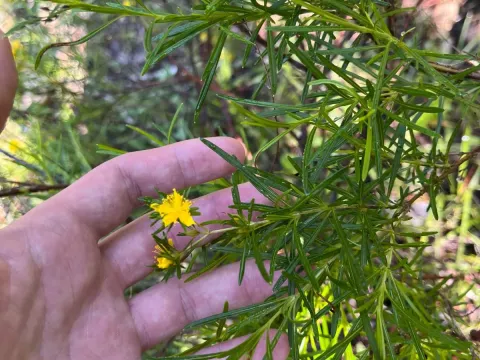
Dense-flowered St. John's wort
Hypericum densiflorum
Hypericum densiflorum, known as the Dense-flowered St. John's wort, is a hardy perennial shrub belonging to the Hypericaceae family. It is native to the eastern parts of North America and is well-adapted to rocky habitats and moist woodlands.
What the section contains
Dense-flowered St. John's wort
Botanically, this shrub is characterized by its woody, highly branched stems and dense clusters of small yellow flowers. The plant usually grows to a height of about 1 to 2 meters, making it a robust structural element in various planting schemes.
The culture requires well-draining soil that is rich in organic matter. While it tolerates a variety of soil types, it performs best in slightly acidic to neutral environments. Consistent soil moisture is essential, though the plant can tolerate short periods of drought once established.
Exposure to full sun is ideal for promoting maximum floral production. In cooler climates, the plant benefits from protection against harsh, drying winds, and it requires adequate space to ensure good air circulation around the canopy.
Beyond its aesthetic appeal, this shrub serves as an important plant for biodiversity, attracting various pollinators. In agricultural settings, it is valued for its hardiness and potential use in restoration projects and medicinal crop production.
The main threats to Hypericum densiflorum include fungal diseases such as root rot and leaf spot. These are primarily caused by poor drainage or excessive humidity around the root crown, necessitating careful site selection.
Aphids and spider mites are common insect pests that may infest the foliage during the peak of summer. Regular monitoring and the application of integrated pest management strategies are effective in controlling these populations without chemical overload.
Rust fungus can occasionally affect the leaves, resulting in orange or brown pustules. Affected foliage should be removed immediately to prevent spores from spreading to neighboring plants, and copper-based fungicides may be applied if necessary.
Proper pruning is a vital cultural practice to maintain plant health and vigor. By removing dead or overlapping branches, gardeners can improve internal airflow, which inherently reduces the risk of fungal proliferation and insect nesting.
Environmental stress, such as extreme heat combined with drought, can make the plant more susceptible to opportunistic pathogens. Mulching the base helps regulate soil temperature and moisture levels, strengthening the plant's natural defenses.