
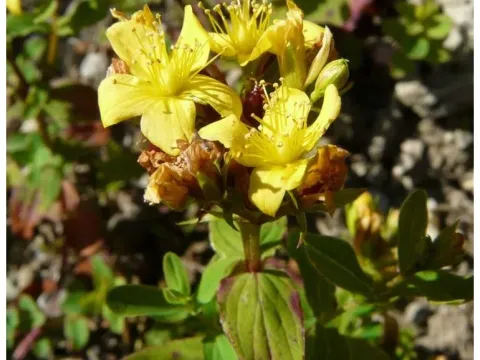
Corsican St. John's wort
Hypericum corsicum
Hypericum corsicum, known as Corsican St. John's wort, is a charming perennial subshrub belonging to the Hypericaceae family. It is endemic to the Mediterranean islands, specifically thriving in the harsh, rocky environments of Corsica and Sardinia.
What the section contains
Corsican St. John's wort
Botanically, it is classified as a low-growing plant with woody bases and vibrant yellow flowers. Its evolutionary adaptation to rocky crevices makes it a perfect candidate for alpine gardening and xeriscaping.
The plant demands full sun exposure to flourish and maintain its dense, compact habit. When grown in suboptimal light, the stems tend to become elongated and leggy, significantly reducing its ornamental value.
Soil requirements are strict regarding drainage. It prefers gritty, mineral-rich soils that mimic the limestone cliffs of its native habitat. Improving drainage with gravel or coarse sand is essential if the native garden soil is heavy or clay-based.
Climate adaptability is limited to Mediterranean-type conditions. While it can survive cool temperatures, it is sensitive to prolonged frost combined with excessive humidity, which necessitates choosing a sheltered site in colder zones.
Despite its hardy nature in its native range, Hypericum corsicum faces certain risks when introduced into diverse garden settings, primarily related to moisture management.
Root rot is the most common pathology, usually triggered by waterlogged conditions. Once the root system is compromised, the plant shows rapid decline and browning of the foliage.
Fungal diseases like leaf spot or rust may occur during unseasonably wet springs. Providing adequate airflow and avoiding overhead irrigation are critical cultural practices to mitigate these issues.
Pests like aphids may occasionally colonize the tender tips during the spring flush. Monitoring and manual removal are usually sufficient for minor infestations on small garden specimens.
Good hygiene in the garden, including the removal of dead foliage at the end of the season, helps prevent the overwintering of pathogens that could infect the plant in the following year.