
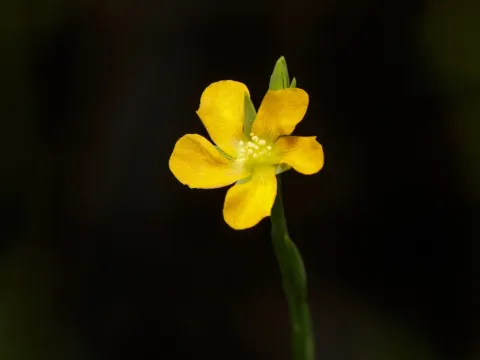
Drummond's St. John's wort
Hypericum drummondii
Drummond's St. John's wort (Hypericum drummondii) is a member of the Hypericaceae family, recognized primarily as an annual herbaceous plant. It is native to North America, typically thriving in open landscapes, fields, and sunny environments.
What the section contains
Drummond's St. John's wort
The plant requires full sun exposure and well-draining, sandy or loamy soils to develop optimally. It is particularly sensitive to stagnant water, which can lead to rapid root decline in poorly drained field conditions.
In terms of climatic preferences, the species is adapted to temperate cycles with warm, long growing seasons. It performs best in areas where humidity levels remain moderate and environmental conditions prevent excessive moisture accumulation around the crown.
Standard agronomic practices involve maintaining clean seedbeds to minimize competition from invasive weeds. The plant's seeds are relatively small, requiring precise sowing depths and proper soil-to-seed contact for uniform germination rates.
Economic utility is largely experimental, focused on botanical study and pharmacological research regarding its bioactive secondary metabolites. As a raw material, it requires standardized harvesting protocols to ensure purity and consistency.
Fungal pathogens represent the primary threat to this crop, especially in humid microclimates. Root and stem rot are frequent complications if the soil drainage is not properly managed during the active growth phase.
Pest populations such as leaf-feeding insects and various aphids can infest the canopy, necessitating regular scouting to prevent damage to the terminal buds and leaves.
Crop rotation protocols should be strictly enforced to break the life cycles of soil-borne diseases that are specific to the Hypericaceae family in agricultural settings.
Integrated Pest Management (IPM) strategies, including the promotion of beneficial predator insects, are recommended over broad-spectrum pesticide applications to preserve the plant's phytochemical integrity.
The presence of hypericin in the tissues makes the plant photo-sensitive and potentially toxic to livestock if ingested, requiring careful site management during cultivation and harvest.