
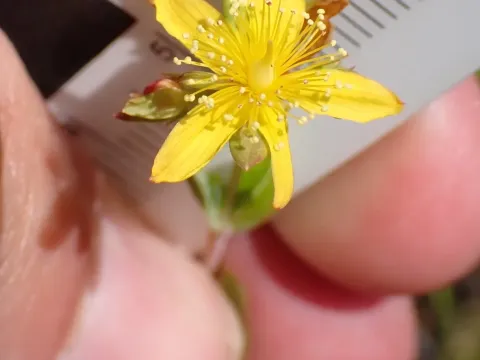
Elliptic St. John's wort
Hypericum ellipticum
Sowing seeds of Hypericum ellipticum is best performed in early spring or late autumn, as the seeds require natural stratification to achieve optimal germination energy.
What the section contains
Elliptic St. John's wort
For spring sowing, the soil temperature should ideally reach at least 10 degrees Celsius to ensure uniform and timely emergence of the crop seedlings.
Seeds are sown into well-prepared, weed-free soil at a depth of 1–2 centimeters, ensuring they are not buried too deeply to prevent growth inhibition.
Seedlings develop slowly during the initial weeks, making it critical to maintain consistent soil moisture levels to support young, delicate sprouts.
In commercial production, row planting with a spacing of approximately 45 centimeters is the preferred method to facilitate efficient mechanical inter-row cultivation.
Elliptic St. John's wort belongs to the Hypericaceae family and thrives in well-drained, light-textured soils with a neutral or slightly acidic pH level.
The crop is highly light-demanding, necessitating cultivation in open, sunny locations while avoiding areas prone to long-term shading or dense tree canopy cover.
While the species exhibits moderate drought tolerance, adequate moisture during the budding and flowering stages is essential for high medicinal yield and vigor.
The plant prefers moderately warm climates and shows good adaptation to seasonal temperature fluctuations typical of its natural native distribution range.
Consistent weed management is vital during the establishment phase, as young plants compete poorly with aggressive weeds that can easily overwhelm the growing crop.
The primary threats to the crop include fungal diseases such as fusarium wilt and various leaf spots, which thrive in conditions of high humidity and poor air circulation.
Pests like aphids and weevils may target the plant's reproductive organs, which significantly impacts the chemical quality of the harvested botanical material.
To mitigate disease pressure, farmers must follow strict crop rotation practices, avoiding replanting Hypericum on the same site for at least four years.
Effective prevention strategies include the prompt removal of infected plant tissue and the strategic use of fungicides, always adhering to pre-harvest intervals.
Maintaining proper soil aeration and planting density is a foundational aspect of integrated pest management to ensure long-term plantation health.
The harvest of the aerial parts (herbage) of Elliptic St. John's wort occurs during peak flowering, when the secondary metabolite concentration is at its highest.
Stems are harvested by cutting the upper 20–25 centimeters, ensuring that woody, low-quality stem bases are excluded to maintain the purity of the final product.
Harvesting should ideally take place on clear, sunny days once the morning dew has evaporated, as this prevents moisture accumulation and potential rot during drying.
Post-harvest, the material must be promptly moved to a well-ventilated drying shed or a controlled-temperature dryer, kept strictly below 40 degrees Celsius.
Finally, the dried raw material is cleaned of physical debris and stored in moisture-proof paper bags, keeping it in a dry and dark environment for preservation.