
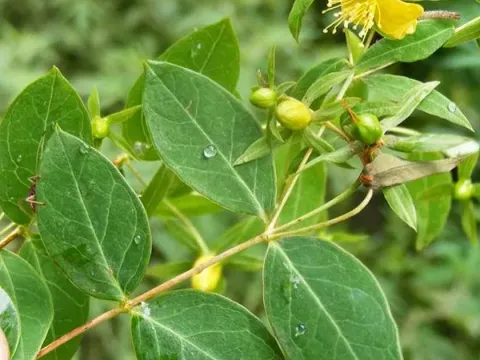
Dyer's St. John's-wort
Hypericum dyeri
Dyer's St. John's-wort (Hypericum dyeri) is typically sown in early spring, once the soil has warmed sufficiently, or as a late autumn planting in milder climates.
What the section contains
Dyer's St. John's-wort
The seeds are exceptionally small, requiring a shallow sowing method where they are lightly pressed onto the soil surface to ensure optimal light exposure for germination.
Maintaining a row spacing of approximately 45 to 60 centimeters is recommended to facilitate efficient weeding and plant management during the growth season.
Constant moisture must be provided to the top layer of the soil during the germination phase to ensure the delicate seedlings do not desiccate prematurely.
Greenhouse propagation is often preferred for large-scale operations, allowing for stronger seedlings to be transplanted once the risk of frost has completely passed.
As a member of the Hypericaceae family, Hypericum dyeri thrives in locations with full sun exposure, which is critical for the development of its medicinal components.
The crop prefers well-draining, light, and fertile loam soils with a neutral or slightly acidic pH, avoiding heavy clays that retain excessive moisture.
This species shows remarkable adaptability to various conditions, originating from high-altitude environments, which gives it resilience against temperature fluctuations.
Proper field drainage is essential, as the root system is susceptible to decay if exposed to stagnant water conditions or prolonged flooding during the vegetative period.
Nutrient management, particularly the application of phosphorus and potassium-rich fertilizers, significantly enhances the overall vitality and metabolic yield of the crop.
The agricultural value of Dyer's St. John's-wort is centered on its harvestable aerial parts, which contain high concentrations of beneficial bioactive compounds.
Productivity increases significantly after the first year, with the second and third years representing the peak production phases for a healthy commercial plantation.
With standardized agronomic practices, including proper plant density and irrigation management, growers can achieve consistent yields of quality herbal material.
Effective weed control is a decisive factor in yield maximization, as competition for light and water can significantly stunt the growth of young plants.
Harvest scheduling based on phenological stages is critical; collecting the material at the exact moment of peak flowering ensures maximum potency and quality.
The primary threats to Hypericum dyeri include fungal infections such as rust and root rot, which are often triggered by high humidity and poor airflow.
Insect pests such as aphids and leaf beetles can cause considerable damage to the foliage and buds, negatively impacting the marketability of the final product.
Integrated pest management strategies, focusing on early detection and biological controls, are highly recommended to preserve the integrity of the herbal crop.
Maintaining proper spacing between rows is a crucial preventive measure, as it encourages better air circulation and reduces the probability of moisture-related diseases.
Crop rotation should be strictly implemented to prevent the buildup of soil-borne pathogens that commonly affect the Hypericaceae family over several seasons.
Harvesting is conducted during the full bloom phase, which corresponds to the time when the plant's secondary metabolites are at their highest concentration.
The upper portions of the stems, approximately 15 centimeters in length, are harvested using mechanical harvesters or sharp hand tools to ensure clean cuts.
Post-harvest, the material must be moved promptly to a drying facility to prevent degradation, mold growth, or unwanted biochemical transformations.
Drying is performed in shaded, well-ventilated structures where temperatures are strictly monitored to remain below 45 degrees Celsius to protect active compounds.
Once dried to the desired moisture level, the product is packaged in airtight, opaque containers to preserve its quality and prevent damage from light and moisture.