
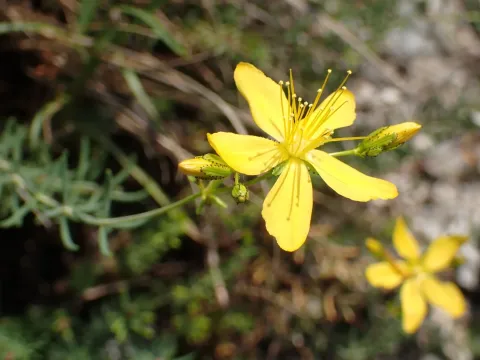
Coris-leaved St. John's wort
Hypericum coris
Hypericum coris, commonly known as Coris-leaved St. John's wort, is an evergreen subshrub belonging to the Hypericaceae family. It is highly valued in horticulture for its narrow, heather-like foliage and vibrant yellow flowers that bloom from late spring to summer.
What the section contains
Coris-leaved St. John's wort
The plant originates from the mountainous regions of Southern Europe and the Mediterranean. Its natural habitat is characterized by rocky slopes and stony soils, which has shaped its biological preference for excellent drainage and direct sunlight.
When cultivating this species, it is essential to provide well-drained, lime-rich soil. In standard garden conditions, it thrives best when planted in rockeries or gravel beds where excess water can escape easily, preventing root rot which is the plant's primary enemy.
The cultural requirements include a sunny location where the plant can receive full sunlight for at least six hours a day. It is relatively drought-tolerant once established, making it a sustainable choice for xeriscaping or low-maintenance garden designs.
Maintenance is minimal, consisting primarily of pruning faded flowers to encourage potential repeat blooming and to maintain a dense, compact habit. It is not prone to demanding heavy fertilization, as nutrient-poor soil is closer to its wild, natural environmental conditions.
The primary threats to Hypericum coris are fungal pathogens, particularly those triggered by overly wet conditions or poor air circulation. Proper soil drainage remains the most effective preventive measure against root-related diseases.
Occasional infestations of aphids or spider mites can occur during exceptionally dry periods. These should be managed with standard horticultural practices, such as water sprays or organic-based insecticidal soaps, if the plant's aesthetic value is compromised.