
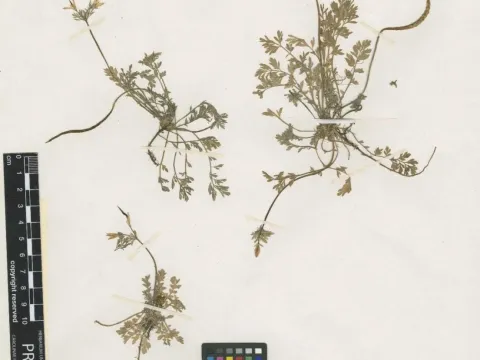
Hypecoum ponticum
Hypecoum ponticum
Hypecoum ponticum is an annual herbaceous plant classified within the Papaveraceae family. In its natural habitat, seed germination typically occurs in the early spring, triggered by the warming of the soil after the dormant winter months.
What the section contains
Hypecoum ponticum
For successful cultivation, seeds should be sown in a loose, well-drained substrate. Given the small size of the seeds, a planting depth of 1–2 centimeters is recommended to ensure that the emerging seedlings can successfully reach the surface.
The plant exhibits high light requirements for optimal development. Sowing in areas with consistent solar exposure is vital, as shading or limited light availability significantly stunts vegetative growth and reduces the intensity of flowering.
The ideal sowing window spans from late March to mid-April, depending on local climate conditions. The seedlings are hardy enough to withstand light spring frosts, allowing them to establish a strong root system before the onset of rapid temperature increases.
Biological resilience is a hallmark of this species, which is known for its ability to self-seed effectively under suitable conditions. This allows for population maintenance on managed plots over multiple seasons without the need for intensive replanting.
This crop is naturally adapted to arid and semi-arid environments, making it highly drought-tolerant. It thrives best in sandy or gravelly soils that provide superior aeration and prevent the accumulation of excess moisture.
Waterlogging is a major threat to Hypecoum ponticum. Constant wetness around the root zone causes rapid decay and inhibits the plant's natural metabolic processes, emphasizing the necessity of selecting well-drained locations for cultivation.
The plant demonstrates a clear preference for soils with a neutral to slightly alkaline pH. In overly acidic environments, the nutrient uptake is severely compromised, which manifests as chlorosis and a shortened life cycle for the entire plant population.
Hypecoum ponticum is physiologically prepared for high summer temperatures and intense solar radiation. It completes its lifecycle rapidly, ensuring that seed production occurs before the most extreme drought conditions of the mid-summer season arrive.
Regarding soil fertility, excessive fertilization—particularly with high-nitrogen compounds—should be avoided. Such practices can lead to excessive foliage production, which often interferes with the plant’s reproductive success and long-term vitality.