
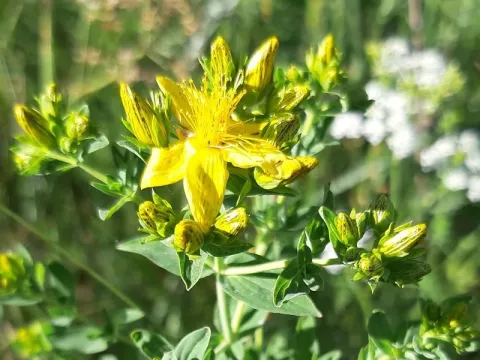
Carinthian St. John's wort
Hypericum carinthiacum
Cultivation of Hypericum carinthiacum requires careful attention to seed preparation, as the seeds are extremely small. Sowing is typically performed in late autumn to allow for natural stratification, or in early spring following a period of cold treatment to ensure uniform germination.
What the section contains
Carinthian St. John's wort
For direct seeding, the soil must be finely tilled and leveled to prevent the seeds from being buried too deep. Seeds are broadcast or sown in shallow rows and covered with a very thin layer of sand or fine compost to hold them in place against wind and rain.
When using a nursery for seedling production, seeds should be sown in trays filled with a light, well-draining substrate. Greenhouse temperatures should be kept between 15°C and 20°C until emergence, after which light levels should be maximized to strengthen the young plants.
Field transplantation usually occurs when seedlings reach a height of at least 10 centimeters. Proper spacing, typically 50 centimeters between rows, ensures adequate airflow and facilitates mechanical weeding operations throughout the growing season.
During the first year, Hypericum carinthiacum focuses primarily on root establishment. Therefore, growers should prioritize weed control over biomass production during this initial phase to ensure the long-term health and vigor of the medicinal crop.
This species thrives in full sun, which is essential for the biosynthesis of secondary metabolites, such as hypericin, which are valuable in medicinal applications. Insufficient sunlight will lead to spindly plants and reduced phytochemical potency.
Well-drained soil with a sandy or loamy texture is ideal for this culture. Heavy clay soils that retain excessive moisture are prone to root rot and should be avoided or amended with organic matter and grit to improve aeration and drainage.
Hypericum carinthiacum is adaptable to various soil pH levels, but prefers a neutral to slightly acidic environment. Soil testing prior to planting is recommended to ensure that essential macronutrients are available in the correct proportions for healthy growth.
While the plant is hardy, it benefits from mulch in colder regions to protect the crown during extreme winter frosts. In drought-prone areas, supplementary irrigation during the peak growing phase will help maximize the quantity and quality of the harvest.
Maintenance involves routine cultivation between rows to disrupt weed growth and improve soil structure. As a perennial crop, it remains productive for several years, provided that pests and diseases are managed effectively from the start.
Fungal pathogens such as rust (Melampsora spp.) and various leaf spots represent the primary threat to the crop. These diseases are most common during periods of high humidity, making open spacing and good drainage critical for disease prevention.
Pests including aphids and leaf beetles can cause significant damage to young foliage. Integrated pest management strategies, focusing on biological controls, are preferred to ensure the final herbal product remains free from harmful chemical residues.
Root rot is a constant risk in poorly drained soils. Farmers should prioritize field selection, avoiding low-lying areas where water tends to pool, as this moisture leads to irreversible damage to the root system of the St. John's wort plants.
Vigilant monitoring for signs of infection is necessary throughout the growing season. Early removal of infected plants can prevent the spread of localized outbreaks to the rest of the plantation, thereby protecting the overall harvest yield.
Regular sanitation, including the removal of dead plant material at the end of the season, helps reduce the overwintering population of pests and spores, keeping the field healthy for the subsequent year of production.