
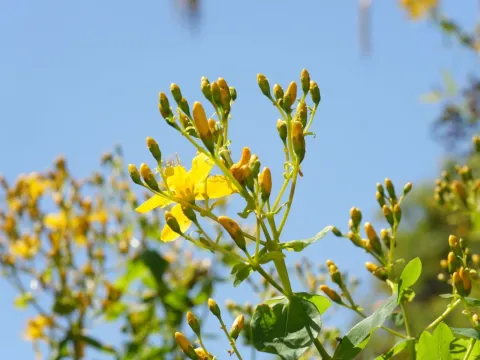
Canary Island St. John's wort
Hypericum canariense
Canary Island St. John's wort (Hypericum canariense) is a perennial shrub belonging to the Hypericaceae family, notable for its distinct wood-like structure compared to other species in the genus.
What the section contains
Canary Island St. John's wort
Originating from the Canary Islands, this plant is adapted to Mediterranean-like subtropical conditions, requiring mild temperatures throughout the year to thrive and maintain its growth cycle.
The species requires well-draining, slightly acidic to neutral soils to prevent root rot. It performs poorly in heavy, waterlogged clay soils, making drainage a critical aspect of site preparation.
Optimal growth is achieved in full sun exposure. While the plant can tolerate partial shade, insufficient sunlight significantly reduces the density of its foliage and the abundance of its characteristic yellow flowers.
Agricultural practices for this culture emphasize minimal but consistent watering, particularly during establishment, and protection from frost, as the species is not winter-hardy in temperate climates.
The primary health threats for Hypericum canariense involve fungal pathogens which typically proliferate under conditions of high humidity, poor soil drainage, or stagnant air circulation.
Aphids are recognized as the most common pest, frequently infesting tender shoots and floral buds, leading to stunted growth and potentially transmitting viral diseases to the plant.
Root rot, specifically caused by overwatering, remains a persistent danger in containerized or poorly drained field cultivations, often leading to rapid plant decline.
Management strategies rely heavily on preventative practices, including maintaining proper planting density and ensuring air movement, which effectively discourages the development of powdery mildew.
Integrated pest management, including the use of targeted systemic insecticides or biological controls, is recommended when pest thresholds are exceeded during the main growth season.