
Burser's St. John's wort
Hypericum burseri
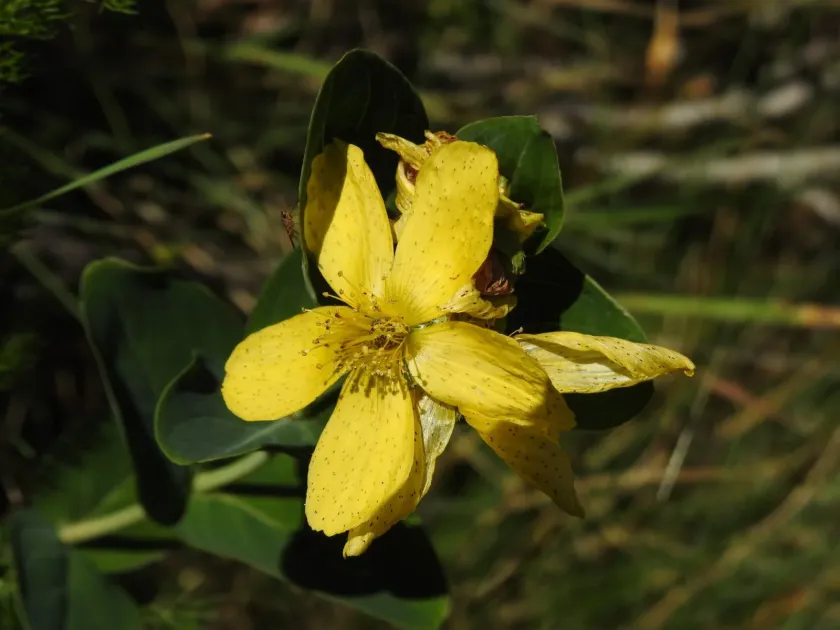
Description
Sowing dates
Sowing of Burser's St. John's wort is best performed in late autumn or early spring, as soon as the soil temperature reaches 5–8 degrees Celsius. The seeds of this crop are extremely small and light-sensitive, meaning they should not be planted deeply; they are best barely covered with a light substrate.
To ensure uniform distribution, a row-cropping method with inter-row spacing of 45–60 centimeters is recommended, as this facilitates mechanized maintenance. Preliminary seed stratification for 30–45 days at low temperatures significantly improves field germination rates for this perennial herb.
The field must be perfectly leveled and weed-free before sowing, as young seedlings grow slowly and are highly sensitive to competition from aggressive weeds. The seeding rate is approximately 2–3 kilograms per hectare, provided the seed material has high purity and viability.
During the first year, the plant primarily forms a basal rosette of leaves, making consistent soil moisture critical during the spring and summer. Thinning the seedlings to a spacing of about 20 centimeters between plants within the row is necessary after the development of 3–4 true leaves.
Mulching the rows immediately after sowing helps retain moisture in the surface layer of the soil, which is vital for such small seeds. Regular watering until the rows close effectively promotes rapid root system development and increases the chances of crop survival.
Growing requirements
Burser's St. John's wort, belonging to the Hypericaceae family, is a perennial herbaceous plant adapted to specific temperate climate conditions. The crop requires open, sunny locations, as shading results in a significant reduction in the concentration of biologically active compounds within the foliage.
The best results are achieved on light, well-drained sandy or loamy soils with a neutral or slightly acidic pH level. The plant is highly intolerant to waterlogging, making fields with high water tables or poor drainage systems unsuitable for its cultivation.
The species exhibits good winter hardiness, allowing it to be grown across various regions provided there is stable snow cover. High solar radiation levels during the flowering stage are the essential requirement for the accumulation of hypericin and flavonoids in the plant tissue.
Agronomic maintenance requires keeping the soil loose and free of weeds throughout the entire growing season, especially in the first two years of the plantation. Adequate levels of phosphorus and potassium in the soil contribute to improved productivity and winter survival of the crop.
Fertilizers should be applied in stages: nitrogen in early spring for vegetative growth, and phosphorus-potassium blends in the fall to prepare the plants for winter. Organic matter like compost improves soil structure and supports long-term vigor in the herb stands.
Yield
Economic productivity of Burser's St. John's wort peaks in the second and third years after establishment, once the plants form a full, mature bush structure. In professional agricultural settings, the yield of dry above-ground biomass can range from 1.5 to 3 metric tons per hectare.
The final yield depends heavily on plant density, overall agronomic management, and strict adherence to harvest timing, which occurs during the peak flowering phase. Obtaining a secondary harvest in the same season is rarely viable, as the plant needs sufficient time to regenerate.
Productivity remains stable for 5–7 years, provided that crop rotation is practiced and fertilizers are applied consistently. Optimal air humidity during the bud formation phase positively influences the quality and yield of the final medicinal raw material.
The efficiency of the drying process is paramount, as poor handling can lead to the loss of essential oils and other volatile compounds. Weed-free conditions are necessary to produce high-quality raw material that complies with pharmaceutical market standards.
Harvesting is typically performed using specialized mowers, adjusted to cut the upper 20–25 centimeters of the flowering stems. The cut material must be transported to the drying facility immediately to prevent overheating and premature fermentation of the green mass.
Main diseases and pests
The most common threats to Burser's St. John's wort are fungal diseases, including leaf rust and fusarium wilt, which are triggered by excessive soil moisture. Prevention primarily involves strict adherence to crop rotation cycles and the use of healthy, certified seeds.
In humid conditions, plants can develop powdery mildew, necessitating timely protective measures using fungicides approved for medicinal crop use. Improving soil aeration and thinning crowded stands significantly reduces the risk of widespread fungal pathogen outbreaks.
Pests, particularly leaf beetles and cutworms, can cause severe damage to the green biomass, reducing overall yield. Using biological protection methods, such as encouraging natural predators or applying bio-pesticides, is preferred for maintaining the purity of the medicinal product.
Aphids often colonize the flower heads, sucking sap and inhibiting growth, which causes deformation of the upper stems. Monitoring pest populations on a weekly basis throughout the active growing season is essential for timely intervention and minimizing crop loss.
Accumulation of pathogens in the soil due to continuous mono-cropping is a major limitation for this species. It is highly recommended to rotate the crop and avoid returning St. John's wort to the same plot for at least 4–5 years to allow the soil health to recover.
Harvesting
Harvesting Burser's St. John's wort is carried out exclusively during the mass flowering phase, when the concentration of medicinal compounds reaches its peak. Delaying the harvest until fruit formation leads to coarser stems and a significant decline in the quality of the raw material.
Mowers must be calibrated to a specific height to ensure that only the upper flowering portions are collected, avoiding woody, non-medicinal lower stems. The harvested herbs should be spread thinly on racks or in mechanical dryers to facilitate uniform moisture removal.
Drying must occur in well-ventilated rooms at temperatures not exceeding 40 degrees Celsius to prevent the oxidation of active ingredients and discoloration of the leaves. Maintaining a constant airflow is essential for achieving a high-quality product that retains its natural vibrant color.
The drying process is complete when the stems are brittle and snap easily, and the leaves can be crushed by hand. Once dry, the material must be packaged immediately in airtight, light-protected containers to preserve its medicinal properties during storage.
Post-harvest cleaning involves removing extraneous matter such as weeds or soil debris that may have been collected during mechanical harvesting. Properly processed and stored dry material can maintain its potency for several years if kept in a cool, dark, and dry environment.