
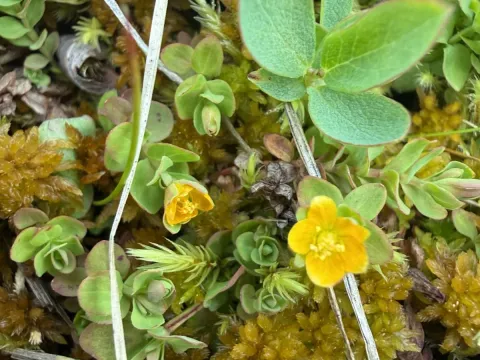
Bog St. John's wort
Hypericum anagalloides
Bog St. John's wort (Hypericum anagalloides) is a member of the Hypericaceae family. It is a distinctive perennial herb characterized by its creeping habit, often forming mats of stems that root at the nodes, allowing it to colonize wet ground effectively.
What the section contains
Bog St. John's wort
Native to western North America, this plant is primarily found in wetland habitats. Its range extends from Washington to California, where it thrives in high-elevation seepages, stream banks, and boggy meadows that maintain moisture throughout the warmer months.
Botanically, the plant is recognized by its small, opposite leaves and terminal clusters of yellow flowers. The stems are typically slender and decumbent, sometimes turning reddish under high sunlight exposure, providing a unique aesthetic in its habitat.
Agricultural and horticultural requirements for this species include high water availability and well-drained but consistently moist, acidic soil. It is not a drought-tolerant species and requires full to partial sun to produce abundant blooms during the peak season.
Its primary use is in landscaping and environmental restoration projects, particularly in creating naturalistic wetland plantings. It serves as an excellent ground cover for areas that remain persistently damp, where standard lawn grasses might struggle.
The plant is susceptible to fungal pathogens that thrive in stagnant water conditions. Root rot is the most common issue when drainage is inadequate, leading to plant decline and death if the environmental moisture balance is not managed.
Insect pests include slugs and snails, which can cause significant damage to the foliage in humid environments. Preventive measures include ensuring good air circulation around the plants and avoiding excessive organic mulch that might harbor these pests.