
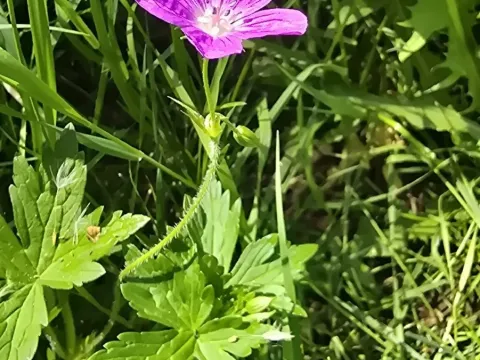
Meadow crane's-bill
Geranium palustre
Sowing seeds of Geranium palustre is recommended in late autumn directly into the open ground, ensuring natural stratification. Autumn sowing allows the seeds to undergo the cycle of cold temperatures necessary for successful germination in the spring.
What the section contains
Meadow crane's-bill
When sowing in spring, seeds require preliminary cold stratification in a refrigerator for 1–2 months. Seeds should be planted in a light, nutrient-rich substrate at a depth of no more than 0.5–1 cm, maintaining adequate spacing to support root development.
The optimal time for dividing established plants is in early spring or late August, when the plant is in a state of relative dormancy. This allows the plants to establish themselves in the new location before the active growth phase or winter frosts.
This species has a strong potential for self-seeding, so commercial growers must manage its spread effectively. The typical planting density is 6–9 plants per square meter to ensure the formation of a healthy and uniform plant cover.
Selecting a site for sowing must account for the plant's natural affinity for moisture. While Geranium palustre thrives in wet conditions, it requires consistent moisture management during the initial stages of vegetative development.
Geranium palustre, belonging to the Geraniaceae family, is a typical perennial herb that thrives in wet environments. In its natural habitat, it is found along the banks of water bodies, in floodplain meadows, and in damp forests across Europe.
The crop demands high soil moisture levels but cannot tolerate prolonged waterlogging, which can cause root rot. Soils should be slightly acidic to neutral, well-drained, and consistently moist throughout the growing season.
For optimal development, the plant requires high light exposure, although it can tolerate partial shade during the peak heat of the day. In conditions of insufficient light, stems may become leggy, and flowering intensity is significantly reduced.
Climatic requirements for Geranium palustre are tied to its temperate origin. It possesses high frost resistance and can endure severe winters without additional protection, making it a viable crop for northern geographical regions.
Agronomic practices include regular weeding and loosening of the soil between rows during the first year of growth. Fertilization with balanced mineral fertilizers should be applied at the beginning of the growing season to stimulate green biomass production.
Economic use of Geranium palustre focuses on harvesting the aerial parts of the plant, which are known for their high biological activity. Medicinal raw materials are harvested during the peak flowering period when tannin and flavonoid concentrations are at their highest.
Harvesting is carried out by mowing the stems at a height of 10–15 cm above the soil surface. It is essential not to damage the basal rosette, which allows the plant to regenerate and continue its life cycle in subsequent seasons.
Immediately after mowing, the material must be dried in a shaded area with good ventilation or in mechanical dryers at temperatures not exceeding 40 degrees Celsius. Overheating can lead to the loss of essential oils and degradation of chemical components.
After drying, the material is cleaned of impurities, crushed, and packed for storage. Properly processed Geranium should retain the characteristic color of its leaves and a specific aroma, indicating the preservation of its quality.
Uses for the plant range from the pharmaceutical industry to landscaping for damp garden areas. The plant's aesthetic appeal and low maintenance requirements make it a popular choice for ecological landscape designs.
The primary threats to Geranium palustre are fungal diseases that develop in conditions of high air humidity. Powdery mildew can infect leaves in the second half of the summer, reducing both the ornamental value and the total yield of the plantation.
Various types of leaf spot diseases also pose a risk, especially in densely planted areas with poor air circulation. To combat pathogens, systemic fungicides should be applied according to established plant protection protocols.
Among pests, aphids and various leaf-eating insects can cause significant damage. Outbreaks of pest populations require timely monitoring and the application of insecticides during the early stages of infestation.
Root-knot nematodes can lead to stunted growth and the premature death of individual plants. Prevention involves practicing crop rotation and ensuring the use of healthy, disease-free planting material.
- Regular sanitary pruning of affected stems.
- Controlling plant density to improve air circulation.
- Timely removal of weeds to reduce disease pressure.
- Adherence to irrigation and fertilization schedules.