
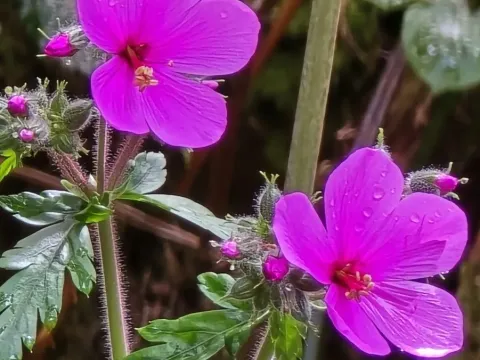
Madeira cranesbill
Geranium palmatum
Geranium palmatum is typically propagated by seeds or division of mature rootstocks. Seed sowing is best performed in a greenhouse environment during late winter to ensure strong seedling development.
What the section contains
Madeira cranesbill
Seeds benefit significantly from a period of cold stratification, which breaks dormancy and promotes uniform germination across the tray.
When transplanting outdoors, ensure a spacing of at least 50 centimeters. This density prevents the plants from competing for nutrients and promotes essential airflow.
The planting site should be prepared with well-aerated soil. Initial watering is crucial to settle the soil around the roots and prevent air pockets that might dry out the root system.
Regular monitoring of seedling development is necessary during the first few weeks after transplantation to ensure the plants have established successfully in their permanent location.
As a member of the Geraniaceae family, Geranium palmatum originates from the island of Madeira. It is adapted to mild, maritime climates and requires consistent environmental conditions.
The plant thrives in partial shade. While it can tolerate some sun, excessive exposure during peak heat can cause the large, palmate leaves to wilt or scorch.
Soil requirements involve a rich, humus-based medium with neutral pH levels. Drainage is the most critical factor; the plant will not tolerate heavy or waterlogged soils.
Moisture management is essential. The soil should remain consistently moist but never saturated. In drier periods, supplementary irrigation becomes a standard requirement for optimal growth.
Temperature management involves protection from deep freezes. While it is reasonably hardy, mulching is recommended in colder regions to insulate the base of the plant during winter dormancy.
The primary pathological threats include fungal infections such as powdery mildew and root rot. These are frequently triggered by poor air circulation and excessive moisture levels in the canopy.
Cultural control methods, such as selective pruning of affected foliage and thinning out overcrowded areas, are effective in reducing the incidence of these fungal diseases.
Pests like aphids and spider mites represent a consistent threat to the foliage. These insects are particularly problematic during dry, warm spells when plant stress is highest.
Chemical intervention should be considered only when populations exceed damage thresholds, prioritizing systemic insecticides that minimize harm to beneficial garden insects.
- Regular monitoring for early signs of leaf discoloration.
- Application of specialized fungicides if infection spreads.
- Maintaining clean garden hygiene by removing dead plant debris.
- Using insecticidal soaps as a first-line treatment for mite outbreaks.