
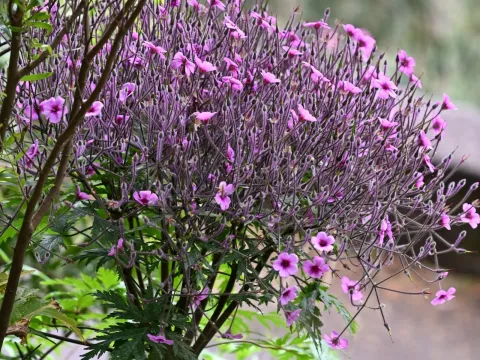
Madeira cranesbill
Geranium maderense
Geranium maderense, known as the Madeira cranesbill, is a spectacular herbaceous perennial belonging to the Geraniaceae family. This species is endemic to the island of Madeira and is highly prized by gardeners for its impressive appearance, resembling a giant rosette of foliage topped with a massive, showy flower head.
What the section contains
Madeira cranesbill
Seeds of this crop are usually sown in late winter or early spring to ensure the plant has enough time to develop a robust leaf rosette before winter. Sowing is carried out in seed trays with light, well-draining substrate, maintaining moderate humidity and a temperature of around 18-20 degrees Celsius.
Germination can be irregular, so it is recommended to use fresh seeds and cover them only lightly with soil. After the first pair of true leaves emerges, seedlings are pricked out into individual pots, providing enough space for the root system to develop properly before transplanting into the ground or moving into larger containers.
Hardening off the seedlings before planting is a crucial step, as the plant is sensitive to sudden temperature fluctuations. In temperate climates, cultivation is often practiced as a pot plant, which allows the specimen to be moved to a protected location if frost is predicted.
Biologically, Geranium maderense acts as a monocarpic species in certain environments or lives for several years until its first abundant flowering, after which the plant produces a large amount of seed and may eventually die, making regular propagation from seed a primary horticultural task.
For successful growth, Geranium maderense requires fertile, humus-rich soil with excellent drainage properties. Waterlogging is lethal to the root system, so in heavy soils, it is recommended to incorporate coarse sand or perlite to improve aeration.
The plant prefers partial shade or locations with filtered sunlight, especially during the hot summer months. Direct, intense sunlight can lead to scorching of the large, fern-like leaves, which are the main ornamental feature of this species.
The optimal temperature range for active growth is between 15-22 degrees Celsius. Although the species can tolerate short-term dips in temperature to moderate freezing points, it is not fully frost-hardy and requires cover or relocation to a greenhouse in regions with harsh winters.
Irrigation should be regular but moderate: the soil should dry out slightly between waterings. During the active growth phase, the plant can be fertilized with balanced mineral fertilizers with low nitrogen content to encourage the development of sturdy tissues rather than excessive, weak foliage.
The plant requires ample space, as the rosette of leaves can reach a diameter of one meter or more. This should be considered when planning landscape plantings, leaving sufficient distance between specimens to allow for proper air circulation.
The main pests for this crop in greenhouses or under conditions of high humidity are spider mites and aphids. They attack the tender tissues of young leaves, sucking the sap and inhibiting the overall development of the plant.
Fungal infections, such as grey mold (Botrytis), can occur with poor ventilation and high air humidity, especially during the winter period. Regular inspection of the lower leaves and removal of dead plant matter are essential for prevention.
Root rots are the most dangerous diseases, often triggered by waterlogged substrate. Using sterile soil and strictly following a proper watering schedule are the primary methods for managing these pathogens.
In outdoor conditions, the plant may be damaged by slugs and snails that feed on the succulent leaves of the geranium. Using gravel mulch or setting up physical barriers around the rosette helps minimize damage.
- Preventive treatments with broad-spectrum fungicides.
- Regular removal of damaged or decaying foliage.
- Pest monitoring during early morning hours.
- Ensuring optimal ventilation and airflow.