
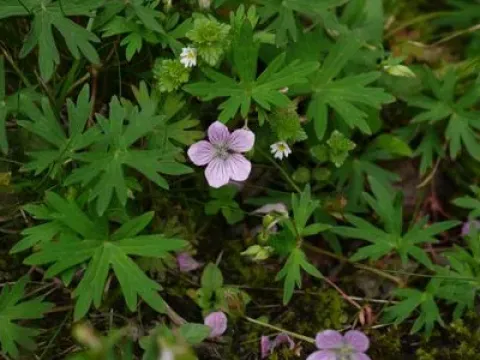
Korean geranium
Geranium koreanum
Korean geranium (Geranium koreanum) is a perennial herbaceous plant belonging to the Geraniaceae family. Native to the Korean Peninsula and parts of East Asia, it thrives in temperate climates with well-defined seasonal changes.
What the section contains
Korean geranium
Propagation of this culture is typically achieved through seeds or vegetative division of the rootstock. For seed propagation, sowing is best performed in early spring once the soil temperature is stable to ensure high germination rates.
Seeds should be sown at a shallow depth of about 1 centimeter in a nutrient-rich, well-draining substrate. Consistent moisture levels must be maintained throughout the germination period, which usually takes several weeks.
Vegetative propagation by division is recommended for established clumps during the early growth stage. This method is preferred for maintaining genetic consistency and results in faster establishment of plants in the field.
Proper spacing between plants is essential for airflow and optimal growth. Maintaining adequate distance helps prevent competition for soil nutrients and reduces the risk of moisture-related diseases.
The plant thrives in well-draining soils with moderate fertility. While it is quite adaptable to different soil types, loamy soils that provide a balance between moisture retention and drainage are ideal for growth.
Korean geranium prefers sunny to partially shaded locations. Sufficient exposure to sunlight is critical for encouraging profuse flowering and maintaining the plant's robust structural health throughout the growing season.
Watering requirements are moderate. The crop is sensitive to waterlogging, which can lead to root rot; therefore, it is vital to ensure that the site has excellent drainage and that irrigation is timed appropriately.
Fertilization should be managed carefully, with a focus on balanced NPK ratios during the active vegetative growth phase. Excessive nitrogen can lead to rapid, weak growth that is more susceptible to environmental stress.
Soil management through regular weeding and shallow cultivation is necessary to maintain soil aeration. Healthy soil structure promotes a strong root system, which is vital for the long-term longevity of the plant.
Fungal pathogens such as powdery mildew and various leaf spot diseases are the primary threats to Korean geranium. These conditions are often exacerbated by high humidity levels and poor ventilation within the canopy.
Pests, most notably aphids and spider mites, can cause significant damage by feeding on the plant's foliage. Heavy infestations can weaken the plant and reduce its aesthetic and physiological value.
Management of these threats involves an integrated pest management (IPM) approach. This includes the use of cultural controls, such as thinning out dense foliage to improve airflow and early detection of pest activity.
Chemical control should be employed only when necessary, using selective pesticides that minimize impact on beneficial insects. Always follow manufacturer guidelines regarding application rates and frequency.
- Removing infected plant debris to reduce pathogen inoculum.
- Using drip irrigation to avoid wetting the foliage unnecessarily.
- Monitoring plants weekly during the peak growing season.