
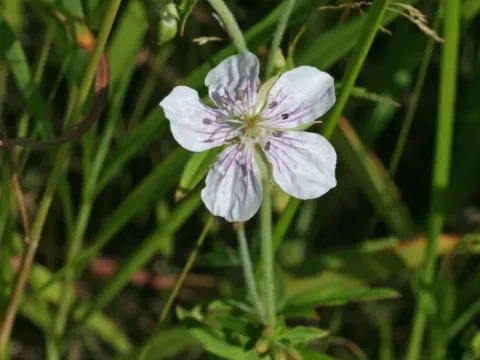
Kramer's geranium
Geranium krameri
Kramer's geranium (Geranium krameri) is a perennial herb belonging to the Geraniaceae family. Its natural distribution is centered in East Asia, where it thrives in forest margins and mountainous meadows.
What the section contains
Kramer's geranium
The plant requires well-drained, fertile soil with a slightly acidic to neutral pH level. It is essential to ensure that the substrate is rich in organic matter to support the rapid growth and flowering intensity of this species.
Regarding climate, this plant prefers moderate temperatures and is well-adapted to cooler climates. While it can tolerate full sun, providing partial shade during the peak of summer is ideal to maintain leaf quality and prevent water stress.
The botanical structure of Geranium krameri features a robust rhizome system and finely dissected foliage. These features make it highly resilient, allowing the plant to spread effectively through vegetative growth.
In terms of economic utility, Kramer's geranium is extensively used in landscape design due to its aesthetic appeal and low maintenance requirements. Furthermore, it has been historically noted for containing secondary metabolites useful in traditional herbal applications.
The most significant pathological threats to this culture are fungal diseases, such as powdery mildew and various leaf spot pathogens, which typically manifest in poorly ventilated environments with high humidity.
Insect pests, including aphids and spider mites, pose a risk during the dry summer season. These pests feed on sap, causing chlorosis and overall weakening of the plant's physiological condition.
Effective management strategy includes maintaining optimal spacing between plants to allow for airflow, which significantly reduces the probability of microclimatic conditions favoring fungal sporulation.
In cases of severe infestation, the use of targeted insecticides or acaricides is recommended, ensuring that the application frequency aligns with the life cycles of the identified pests.
Regular monitoring of the field is crucial for detecting symptoms early. Integrated pest management practices remain the most sustainable way to protect this crop from biological stress factors.