
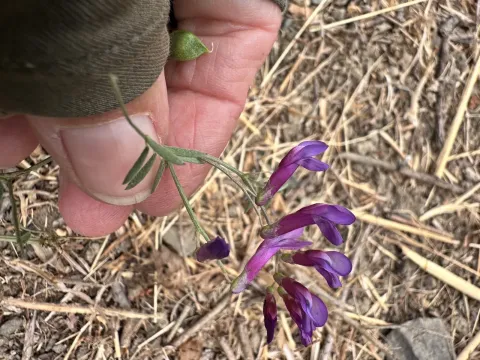
Hairy-podded vetch
Vicia eriocarpa
Hairy-podded vetch (Vicia eriocarpa) is an annual legume species belonging to the Fabaceae family. It is highly valued in agriculture for its ability to produce significant biomass and contribute to soil nitrogen fixation, making it an excellent green manure crop.
What the section contains
Hairy-podded vetch
Sowing typically occurs in early spring as soon as the soil is workable. The seeds germinate well at temperatures ranging from 5 to 7 degrees Celsius, allowing the crop to establish itself while soil moisture levels are optimal.
In regions with milder winters, fall sowing is also feasible, which allows the crop to gain a head start and produce an earlier biomass harvest. Planting depth is generally 3 to 6 cm depending on soil texture, ensuring proper contact with soil moisture.
Seeding rates are adjusted based on the intended use, with higher rates used for green fodder production to ensure a dense canopy. Spacing between rows usually follows standard cereal sowing patterns, typically around 15 cm.
Inoculation of seeds with appropriate Rhizobium strains is highly recommended before planting to maximize nitrogen-fixing efficacy and enhance the plant's overall growth potential.
This crop prefers well-drained loams and fertile soils. It is moderately adaptable to different soil types but thrives best in conditions with neutral pH; acidic soils should be limed to ensure optimal bacterial activity.
Hairy-podded vetch requires adequate sunlight and performs best in open fields. It is relatively drought-tolerant once established but needs consistent moisture during the vegetative growth phase to reach its full yield potential.
It is sensitive to waterlogging, which can cause root rot and significantly inhibit nodule formation. Proper field drainage is a critical prerequisite for successful cultivation in regions with high precipitation.
The plant is relatively competitive against weeds once the canopy closes; however, early season weed control is necessary. Mechanical weeding or appropriate herbicide use during the early growth stages is advised.
Climate adaptability is one of its strengths, as it tolerates minor frost events, making it a reliable choice for temperate climates with unpredictable spring weather patterns.
The green biomass yield can range from 25 to 35 tonnes per hectare, depending on soil quality and fertilization. Phosphorus and potassium are the primary nutrients that influence both vegetative growth and flowering intensity.
Seed production is another objective, with yields ranging between 1.5 and 2.5 tonnes per hectare under favorable conditions. Successful harvest timing is crucial to avoid seed shattering.
Intercropping Vicia eriocarpa with small grains like oats or barley is a common practice. This provides physical support for the vetch stems, significantly reducing lodging and facilitating easier mechanical harvesting.
Nutritional value is a key metric, with the crop providing high levels of digestible proteins. Harvesting at the peak of bloom ensures the optimal ratio of biomass to nutrient concentration.
As a predecessor in a crop rotation, this vetch provides substantial benefits, including improved soil structure and residual nitrogen, which significantly boosts the yields of following cereal crops.
Common diseases affecting this crop include powdery mildew, rust, and anthracnose. These fungal issues are often exacerbated by high humidity and poor air circulation within the canopy.
Pests such as pea weevils and aphids can cause significant damage. Monitoring population levels during the bud development stage is vital to determine if intervention with insecticides is necessary.
Integrated pest management, including crop rotation and the use of resistant varieties, is the most sustainable approach to minimize the impact of pathogens and insect threats.
Storing the harvested seed requires careful management, as stored grain pests can quickly degrade seed quality. Maintaining low moisture levels is essential for long-term storage viability.
Field hygiene, such as destroying crop residues and maintaining spatial isolation from other susceptible legumes, plays a major role in preventing the build-up of diseases in the soil.
The ideal time for harvesting as green fodder is during the early flowering phase. This provides the best balance between biomass quantity and protein content before the stems become too fibrous.
When harvesting for hay, rapid drying is critical to prevent leaf loss. Using modern forage equipment, like windrowers and balers, ensures that the most nutrient-dense parts of the plant are preserved.
Seed harvesting is conducted when the pods have fully matured and turned brown. Combining at this stage requires precise adjustment of the machine to prevent mechanical damage to the seeds.
Post-harvest processing involves cleaning and drying the seeds to a moisture content of approximately 14%. This prevents mold and heat damage during storage in warehouses.
Efficient management of the harvest process is key to maximizing the economic return of the crop, whether it is used for livestock feed or as a seed crop for the next season.