
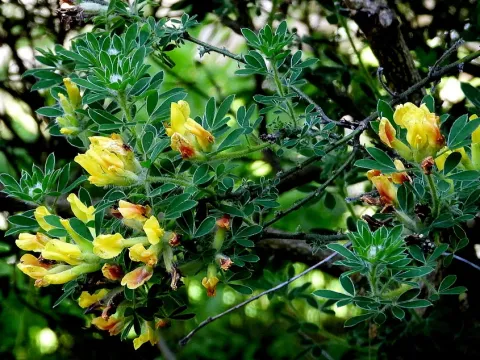
Hairy-fruited broom
Cytisus eriocarpus
The hairy-fruited broom, Cytisus eriocarpus, is a perennial leguminous shrub belonging to the Fabaceae family. It is distinguished by its dense, woolly pubescence on the stems and seed pods, which provides a unique aesthetic quality.
What the section contains
Hairy-fruited broom
Originating from the Balkan region and Southeastern Europe, this species is well-adapted to rocky, dry slopes and open woodlands. Its natural resilience makes it an ideal candidate for cultivation in arid, climate-stressed areas.
This crop thrives in well-drained, sandy, or rocky soils with a neutral or slightly alkaline pH. It is highly sensitive to waterlogging, necessitating planting sites with excellent drainage properties to ensure long-term survival.
Agronomically, the plant is valued for its ability to fix atmospheric nitrogen, which enhances soil fertility. This makes it an excellent choice for revegetation projects, erosion control, and rehabilitating depleted soil sites.
As a landscape plant, Cytisus eriocarpus is highly esteemed for its vibrant yellow flowers. It serves as a significant nectar source for pollinators, supporting biodiversity in agricultural and natural ecosystems alike.
Common pests affecting Cytisus species include aphids, which tend to congregate on young, succulent shoots. Integrated pest management, including the use of soaps or systemic insecticides, is recommended for effective control.
Powdery mildew represents the primary fungal challenge, especially in environments with poor air circulation or high humidity. Ensuring proper spacing during plantation establishment is key to preventing widespread outbreaks.
Leaf spot diseases can cause premature defoliation if left unmanaged. Regular cleaning of fallen leaves around the base of the shrub helps reduce inoculum levels for the following season.
Spider mites may become a nuisance during prolonged periods of hot, dry weather. Monitoring and maintaining plant vigor through appropriate irrigation practices are essential to withstand such infestations.
Overall, the plant is relatively robust provided that the site selection prioritizes excellent aeration and soil drainage to avoid chronic fungal pathogen issues.