
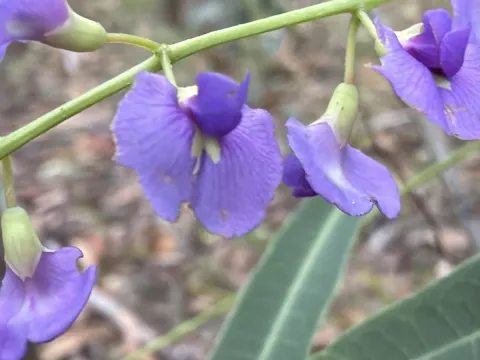
Hardenbergia
Hardenbergia
Hardenbergia is typically propagated via seeds or stem cuttings. Sowing should be carried out in early spring to take advantage of the increasing daylight hours for optimal seedling growth.
What the section contains

Hardenbergia
The seeds of Hardenbergia have a hard coat, requiring scarification or soaking in warm water for several hours to facilitate germination and ensure uniform emergence.
Seeds should be sown in a light, well-draining potting medium at a depth of about 0.5 to 1 centimeter. Covering the containers helps maintain the humidity required for initial development.
Once true leaves appear, seedlings should be transplanted into individual pots. Providing adequate light at this stage is essential to encourage the development of a strong vine structure.
Cuttings are best taken during the summer months using semi-hardwood stems. Rooting hormones can significantly improve success rates when placed in a moist and warm propagation medium.
Hardenbergia belongs to the Fabaceae family. This evergreen woody climber originates from Australia and is well-adapted to various woodland and scrubland habitats.
The plant thrives in bright, indirect light. While it appreciates high light levels, intense afternoon sun may scorch the foliage, making semi-shaded spots ideal for healthy growth.
Soil requirements include excellent drainage and a slightly acidic to neutral pH. A nutrient-rich, organic-based substrate supports the rapid growth and flowering of the climber.
Temperature management is crucial, with an ideal range of 18–24 degrees Celsius during the active growing season. A cooler period in winter is often beneficial for floral bud initiation.
Consistent watering is necessary, allowing the top layer of soil to dry out between applications. Hardenbergia does not tolerate waterlogging, which often leads to root rot issues.
Spider mites are the most common pests affecting Hardenbergia, especially in environments with low humidity. They typically colonize the underside of leaves, causing yellowing and webbing.
Aphids and mealybugs can also infest the tender shoots of the vine. Regular inspections and the use of insecticidal soaps or biological controls can effectively manage these populations.
Root rot is a major threat caused by overwatering or poor drainage. This condition can severely compromise the plant's vascular system, leading to wilting and eventual collapse.
Powdery mildew may develop in areas with stagnant air and high humidity. It presents as a white powdery coating on foliage, which can be treated with specific fungicide sprays.
Ensuring good air circulation around the trellis or support structure is the best preventative measure against most fungal diseases and many common insect pests.