
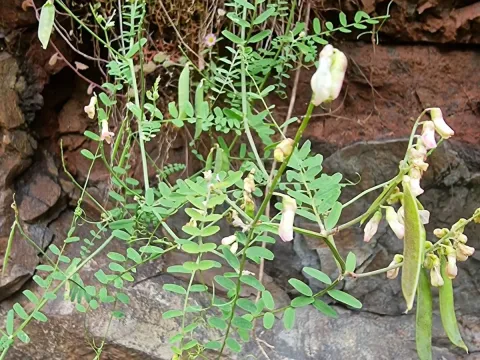
Hairy vetchling
Vicia capreolata
Hairy vetchling belongs to the Fabaceae family. As an annual legume, it is typically sown in early spring as soon as the soil is workable, allowing the crop to utilize residual winter moisture for optimal germination.
What the section contains
Hairy vetchling
The seeding rate varies depending on whether the crop is grown as a monoculture or in a mixed forage stand. Row planting with a spacing of 15 centimeters is standard practice to ensure adequate density and uniform growth.
Seeds are usually planted at a depth of 3 to 5 centimeters. In lighter, sandy soils, a slightly deeper planting is recommended to ensure the seed has access to moisture, while shallower planting is safer in heavy clay soils.
In cases where the crop is used as a cover or catch crop, sowing dates may be adjusted. Successful establishment requires a consistent soil temperature above 5 degrees Celsius to trigger active development.
Achieving a proper stand density is vital for weed suppression. Dense growth prevents competing weeds from establishing themselves and promotes a favorable microclimate within the crop canopy.
The plant performs best in a temperate climate with sufficient rainfall. It is sensitive to extreme heat and prolonged drought, so in drier regions, irrigation or careful site selection is required to ensure success.
Fertile loamy or sandy loam soils with a neutral or slightly acidic pH are ideal. Hairy vetchling does not tolerate waterlogged conditions, so fields with poor drainage should be avoided to prevent root rot.
Abundant light is necessary for vigorous vegetative growth. Although it possesses some shade tolerance in the seedling stage, maximum yields are only achievable when the plants receive consistent sunlight.
Phosphorus and potassium are essential nutrients for root development and legume pod formation. While nitrogen fixation occurs, a small amount of nitrogen fertilizer can be beneficial during the initial establishment.
Soil structure should be friable to facilitate root penetration and aeration. Occasional cultivation between rows during the early stages helps to prevent crusting and improves the availability of nutrients.
The yield of green matter depends heavily on soil fertility and management practices. Under favorable conditions, the crop can provide multiple harvests in a single season if managed correctly.
To improve nutritional value and provide structural support for the vetchling vines, farmers often intercrop it with cereals like oats or barley. This combination increases overall biomass and improves the feed quality.
Harvesting at the peak of the flowering stage ensures the highest protein content and digestibility. This makes the harvested material an excellent choice for haylage or silage production.
Yield stability is linked to the activity of nitrogen-fixing bacteria in the root nodules. Maintaining soil health and providing necessary trace elements will encourage these beneficial bacteria to thrive.
Early-season weed control is critical to protect the potential yield. If weeds are allowed to compete for nutrients and light in the first month, productivity can drop significantly by harvest time.
Like many legumes, hairy vetchling can be susceptible to fungal diseases such as anthracnose and various rusts, especially in humid conditions. Dense, poorly ventilated stands are more prone to these infections.
Common pests include pea leaf weevils and aphids, which can damage foliage and roots, hindering overall plant development. Early detection is vital to prevent significant infestations.
Crop rotation is the most effective strategy to break pest and disease cycles. Avoiding the planting of legumes on the same field for multiple consecutive years significantly reduces soil-borne infection risks.
Treating seeds with fungicides before planting helps protect young seedlings from early-season pathogens. This practice ensures a strong, uniform stand from the very beginning of the season.
Regular field scouting allows for timely intervention if pest or disease thresholds are met. Using approved treatments selectively minimizes environmental impact while protecting the quality of the fodder.
Harvesting for green biomass should be timed with the full flowering stage, which represents the optimal balance of nutrient content and biomass volume. Delaying harvest results in stem lignification.
For hay production, rapid wilting is essential to maintain feed quality. Using tedders to spread and turn the cut material helps ensure uniform drying while preserving the protein-rich leaves.
When harvesting for seeds, farmers wait until the pods have turned a characteristic dark brown. It is crucial to perform the harvest before excessive pod shattering occurs to minimize field losses.
Equipment calibration is vital to avoid crushing the seeds during the harvest process. Modern combines should be set to gentle operating speeds to maintain seed viability for future sowing.
After the harvest, crop residues should be incorporated into the soil as green manure. This practice replenishes soil organic matter and nitrogen, providing long-term benefits for subsequent crops.