
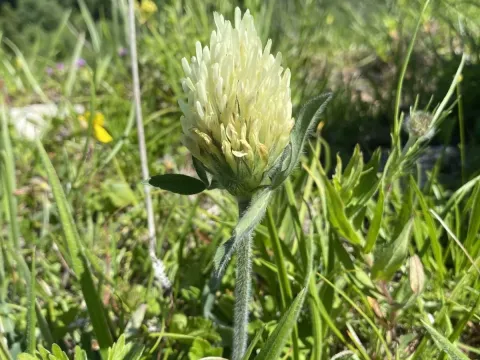
Hairy-head clover
Trifolium trichocephalum
Hairy-head clover is a perennial legume species characterized by high adaptability to the natural conditions of its native range. The optimal time for sowing is early spring, once soil temperatures reach 8–10 degrees Celsius.
What the section contains
Hairy-head clover
When sown in late autumn, the seeds undergo natural stratification, which significantly improves germination rates in the spring. It is vital to prepare the seedbed thoroughly, as the small seeds require shallow planting depths, typically no more than 1–2 centimeters.
The seeding rate depends on whether the crop is grown as a pure stand or within a forage mixture. Generally, when establishing pastures or hay fields, a seeding rate of approximately 10–12 kilograms per hectare is recommended.
Soil rolling after seeding is necessary to ensure firm contact between the seeds and the moist substrate, promoting uniform germination. In the first year, the plant develops slowly, focusing its energy on root system establishment and the formation of a basal rosette.
In subsequent years, Hairy-head clover shows rapid regrowth after the snow melts and spring frosts recede, making it an excellent candidate for early-season agricultural planning.
Native to the mountainous regions of the Caucasus and Asia Minor, this crop possesses superior winter hardiness and the ability to withstand prolonged periods of drought. It prefers well-lit areas, as shade significantly reduces biomass productivity.
Hairy-head clover is not highly demanding regarding soil quality, but it performs best in structural, well-aerated loams with a neutral to slightly alkaline pH. It successfully thrives even on rocky or nutrient-poor terrain.
Groundwater levels are crucial for healthy growth, as excessive moisture or waterlogging can lead to root rot. In mountainous terrain, this plant is valued for its ability to stabilize the soil and prevent erosion.
Cultivation practices should include the application of phosphorus and potassium fertilizers to support root development and sugar accumulation. Nitrogen fertilization is generally unnecessary due to the plant's effective symbiosis with nitrogen-fixing bacteria.
During the flowering stage, the crop requires adequate moisture; however, its pubescent (hairy) leaves and stems help retain internal moisture, demonstrating significant xerophytic traits compared to other clover species.
The agricultural value of Hairy-head clover lies in its stable biomass yield, which can be maintained for 5–7 years in the same location. Yield capacity is highly dependent on regional climatic conditions and management intensity.
Under favorable conditions, the plant forms a dense stand reaching heights of 40–60 centimeters during flowering. The nutritional quality of the forage remains high due to the leafy nature of the stems, ensuring the hay is both palatable and protein-rich.
Compared to traditional clover varieties, this species is less prone to lodging, which simplifies mechanized harvesting. Its integration into perennial pastures provides consistent feed availability throughout the grazing season.
Seed production is moderate but sufficient for crop renewal. Harvesting should occur when the flower heads turn brown, with careful management to prevent seed shattering during adverse weather conditions.
To maximize biomass output, timely mowing is recommended before the stems become too coarse, as excessive lignification decreases the intake rate for livestock.
The primary threats to Hairy-head clover include fungal diseases such as anthracnose and various rusts, which are particularly prevalent during damp seasons. Such infections reduce photosynthetic activity and the overall nutritional value of the forage.
Common pests include clover root curculios, which damage both the root system and foliage during early growth stages. Aphid infestations may also occur, as they extract sap from young shoots during the budding phase.
Effective phytosanitary control relies on strict crop rotation and preventing overly dense stands. Timely mowing helps break the life cycle of many pests that overwinter in the plant's canopy.
Disease prevention strategies include using high-quality treated seeds and applying lime to soils if they become too acidic. Healthy plants typically possess a natural resistance to most common pathogens.
In cases of severe pest infestation, biological insecticides may be used; however, agronomic management practices are preferred for forage crops to minimize the risk of pesticide residues in the harvested biomass.
Hay harvesting should be conducted during the full flowering stage, as this provides the optimal balance between biomass volume and nutritional content. Delaying the harvest leads to fiber accumulation and leaf loss.
Mowing is best performed in the morning after the dew has evaporated. The use of modern mower-conditioners accelerates the drying process, which is critical for maintaining vitamin quality and preventing fungal growth.
On uneven or hilly terrain, particular attention must be paid to the cutting height. A minimum stubble height of 5–7 centimeters should be maintained to ensure rapid regrowth for the next cut.
The harvested forage should be dried in windrows until moisture content falls below 15–17%. Storage must take place in dry, well-ventilated areas protected from rainfall and direct sunlight.
When using clover for grazing, a rotational management system should be employed. This allows the plants to replenish nutrient reserves in their root systems after grazing, ensuring plant longevity and sustained productivity.