
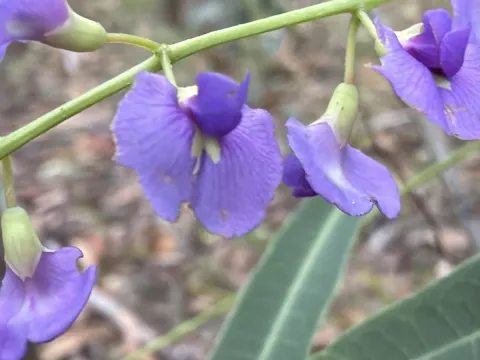
Hardenbergia
Hardenbergia Benth.
Hardenbergia (Hardenbergia Benth.) is a genus of evergreen woody vines belonging to the Fabaceae family. Originating from Australia, these plants are widely recognized for their vigor and ornamental value. They thrive in diverse Australian habitats, ranging from woodland understories to open, rocky, and well-drained slopes.
What the section contains


Hardenbergia
For successful cultivation, Hardenbergia requires well-drained, slightly acidic to neutral soil. The plants are sensitive to waterlogging, so it is essential to ensure a porous substrate that prevents root rot. Incorporating organic matter during planting helps support steady growth and health.
The climate requirements for Hardenbergia are relatively specific; they perform best in mild, subtropical environments. While they are hardy to light frosts, they generally require protection from extreme cold. In colder regions, they are commonly grown as container plants or in conservatories to maintain optimal temperatures.
Botanically, these vines feature leathery leaves and distinctive, pea-like flowers arranged in long, graceful racemes. The flowers vary in color, typically manifesting in shades of purple, pink, or white. The plant utilizes twining stems to climb surfaces, reaching significant heights with proper support.
Economically and horticulturally, Hardenbergia is utilized for vertical gardening, landscaping, and environmental stabilization. It is highly valued for covering fences, pergolas, and arbors. In its native habitat, it also plays a role in supporting local biodiversity by providing nectar for pollinators.
The primary threats to Hardenbergia are pathogens associated with root rot, typically occurring when plants are grown in poorly draining soils or subjected to excessive irrigation. Maintaining an appropriate moisture balance is the most effective way to prevent these detrimental conditions.
Common pests include spider mites and scale insects, which are particularly problematic in dry indoor environments or greenhouses. These pests feed on the sap of the foliage, often resulting in yellowing leaves, stunted growth, and a significant decline in the vine’s overall aesthetic appeal.
Effective management involves consistent monitoring of the plant's health. Providing good airflow around the stems and avoiding crowded conditions can significantly reduce the risk of both pest infestations and fungal infections. Early detection is crucial for managing these issues.
If an infestation occurs, targeted use of insecticides or acaricides is recommended to eliminate the population. It is vital to apply these treatments according to environmental guidelines to avoid harming beneficial insects, especially if the plant is grown outdoors.
Overall, Hardenbergia is a resilient plant when its basic requirements are met. Consistent maintenance, including regular pruning and precise watering, ensures the longevity and prolific flowering of this beautiful woody climber.