
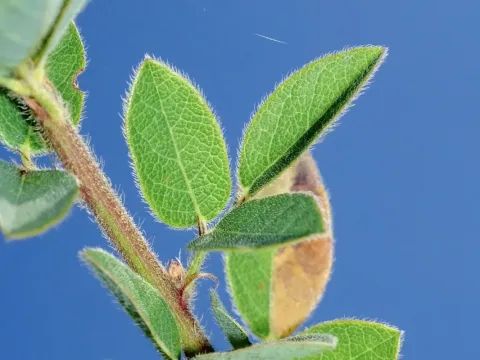
Hairy tick-trefoil
Desmodium ciliare
Hairy tick-trefoil (Desmodium ciliare) is best sown in the spring when soil temperatures reach a consistent range of 18–20 degrees Celsius. This ensures rapid germination and early root development.
What the section contains
Hairy tick-trefoil
Seeds should be planted at a shallow depth of 1–2 centimeters, as deeper burial can significantly reduce emergence rates. A firm seedbed is essential to ensure good soil-to-seed contact and adequate moisture absorption.
For efficient field establishment, using calibrated seeding equipment is recommended. If planting in mixtures with grasses, seeding rates must be adjusted based on the competitive nature of the companion species.
The average seeding rate ranges from 6 to 10 kilograms per hectare depending on the purity and germination potential of the seed batch. Proper inoculation with specific nitrogen-fixing bacteria is highly encouraged for best results.
Rolling the soil immediately after sowing helps maintain surface moisture, providing a more reliable environment for young seedlings to take root and thrive during their initial growth phase.
As a member of the Fabaceae family, Hairy tick-trefoil is an effective nitrogen fixer. It thrives in well-lit environments and prefers full sunlight for optimal biomass production throughout the growing season.
The crop is highly adapted to well-drained sandy loam or light loamy soils. It cannot tolerate waterlogged conditions, making adequate soil drainage a non-negotiable requirement for sustainable cultivation.
Hairy tick-trefoil is noted for its drought tolerance, which is attributed to its deep taproot system. This makes it a valuable plant for regions that experience intermittent dry spells during the summer months.
It is relatively hardy, though severe, prolonged frost can cause damage to the above-ground biomass. In temperate climates, it usually survives well and regrows vigorously once spring temperatures return.
Soil pH levels should be maintained near neutral to slightly acidic. If soil tests indicate high acidity, lime application is recommended to create the ideal environment for the beneficial symbiosis with soil microbes.
Yields of Hairy tick-trefoil vary significantly based on site productivity and management intensity. Under ideal conditions, the crop can support two substantial harvests per season with proper regrowth management.
Average dry matter yields reach 3 to 5 tons per hectare. Its high leaf-to-stem ratio contributes significantly to the nutritional quality, providing a high-protein feed source for grazing livestock.
During the first year, growth is typically slow as the plant invests energy into developing its root architecture. Yield potential increases substantially in subsequent years once the stand is established.
Sustainable grazing practices are necessary to maintain the longevity of the stand. Overgrazing can deplete root reserves and hinder the plant’s ability to recover effectively after being defoliated.
Beyond grazing, the crop is suitable for hay production. Harvesting at the peak of quality ensures that the hay provides high nutrient density for supplemental winter feeding for herds.
Fungal diseases, particularly anthracnose and leaf spots, pose the greatest threat to Hairy tick-trefoil when humidity levels are persistently high or when canopy ventilation is poor.
Insect pests such as aphids and various weevils can damage foliage and interfere with flower development. This can reduce both the overall biomass yield and the production of viable seeds.
Effective management includes crop rotation to disrupt the life cycles of pathogens and pests. Ensuring adequate plant spacing also helps reduce the incidence of moisture-related fungal growth.
When chemical control is necessary, products must be selected to minimize impact on beneficial pollinators, which are vital for seed set in legume crops like Hairy tick-trefoil.
Early season weed control is critical. As the seedlings develop slowly, they are susceptible to competition from fast-growing weeds, which can shade out young tick-trefoil plants.
For high-quality forage, Hairy tick-trefoil should be harvested at the onset of the flowering stage. At this time, the plant balances biomass quantity with high nutritional value and protein content.
When producing hay, careful drying is essential to prevent leaf shattering. Because the leaves contain most of the protein, preserving them during the baling process is a priority for quality control.
Seed harvesting should occur when the seed pods have turned brown but before they naturally dehisce (shatter). Timely harvest is crucial to prevent significant seed loss on the field surface.
Adjusting combine settings, specifically reducing cylinder speed and air flow, helps minimize mechanical damage to the seeds. Proper cleaning equipment is then used to remove chaff and debris.
Seeds must be stored at moisture levels below 14% in cool, dry facilities. This ensures the maintenance of germination viability for subsequent planting seasons in the agricultural rotation.