
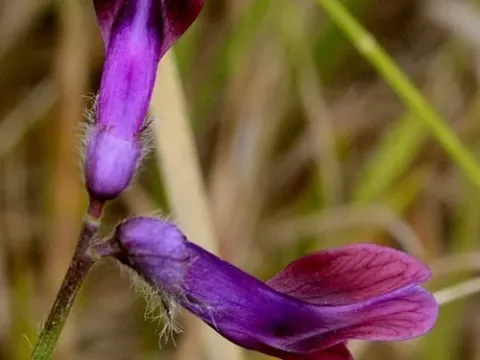
Costae Vetch
Vicia costae
Sowing of Costae vetch (Vicia costae) is carried out early in the season, as soon as the soil reaches physical maturity and warms up to 5-8 degrees Celsius. Early sowing is critical, as the plant effectively utilizes stored winter moisture for active initial growth.
What the section contains
Costae Vetch
The optimal planting depth is 3 to 5 centimeters, depending on soil type. For heavy loams, shallower sowing is recommended, while in light sandy soils, the depth can be increased to ensure proper contact between the seed and the moist substrate.
Seeding rates are calculated based on the intended use of the crop and the thousand-kernel weight. A standard drill method with row spacing of 15 centimeters is typically used, allowing the crop to quickly establish a closed canopy to suppress weeds.
To improve nitrogen fixation, seed inoculation with specific rhizobia strains is recommended. This promotes better root system development and increases the plant's ability to fix atmospheric nitrogen efficiently.
Intercropping with cereals, such as barley or oats, is possible to increase lodging resistance. Combined cultivation allows for the production of forage with a balanced ratio of protein and carbohydrates.
Costae vetch belongs to the Fabaceae family and has moderate climate requirements, preferring cool and humid environments. It is well-adapted to temperate zones and shows resistance to short-term spring frosts.
The crop develops best in fertile loamy or sandy loam soils with a neutral or slightly acidic pH. Areas with high water tables or water stagnation are highly discouraged, as these conditions provoke root rot.
The plant is demanding regarding soil phosphorus and potassium availability, which must be considered during fertilizer planning. Applying mineral fertilizers during pre-sowing cultivation significantly boosts green mass yields.
Light intensity plays a vital role in vegetative development. Costae vetch is a light-loving plant, so overcrowding in low-light conditions can lead to reduced nutritional value of the harvested biomass.
In crop rotations, vetch serves as an excellent predecessor for most cereal crops. Through its ability to enrich the soil with biological nitrogen, it improves soil structure and creates a favorable environment for subsequent plantings.
The primary pests affecting this crop include weevils, which can damage seedlings during the early development stages. Significant damage is also caused by aphids and the pea seed beetle, which attacks the plant's reproductive organs.
Common diseases include anthracnose and ascochyta blight, caused by fungal pathogens. These diseases manifest as spots on leaves and stems, leading to premature drying of the green mass.
Control measures include strict adherence to spatial isolation from previous legume crops and the use of high-quality treated seed material. Chemical insecticide treatment is justified only when pest populations reach economic thresholds.
Prevention of root rot relies on maintaining a crop rotation that avoids continuous legume monoculture for several years. It is important to monitor soil structure and avoid compaction.
Phytosanitary monitoring of the fields should be conducted weekly during the active growing season. Early detection of infection centers helps minimize yield losses and prevents epiphytotic disease outbreaks.
Harvesting Costae vetch for green mass or hay is conducted during the full flowering phase, when protein and sugar concentrations in the plant reach their maximum levels. Delaying harvest leads to stem coarsening and reduced nutritional quality.
Hay production requires rapid cutting and wilting in windrows. An optimal drying regime preserves the leaf canopy, which is the most valuable part of the plant for protein content.
For seed production, harvesting begins when pods on the lower and middle parts of the plant mature and change color. It is important to avoid over-ripening to prevent pod shattering and harvest losses during cutting.
Harvesting technology can involve swathing or direct combining, depending on weather conditions and field state. Direct combining is feasible in dry weather with low weed interference.
Post-harvest seed processing includes cleaning, drying to a moisture content of no more than 14-15 percent, and storage in dry, ventilated facilities. Adherence to these conditions ensures the maintenance of high seed germination rates for the following season.